

【Sustainability and TDK】
Driving Digital Transformation in Construction
Worldwide with a High-Precision Inclinometer
Italy’s Leaning Tower of Pisa is a well-known example of a structure that gradually developed a pronounced tilt over many years as a result of small shifts in the ground beneath it. In construction and civil engineering sites, as well as in public infrastructure such as bridges, tunnels, and retaining walls, even subtle changes in inclination can signal deteriorating ground or structural integrity—and, if overlooked, potentially lead to serious accidents.
Reducing these risks demands continuous, high-precision monitoring of changes in the inclination of the ground and structures. TDK is combining its high-precision sensing and wireless communication technologies to promote an inclinometer capable of remote, real-time monitoring of minute changes in inclination. By enabling the early detection of anomalies, the system contributes to safety monitoring at construction and civil engineering sites and to the maintenance of public infrastructure, while supporting sustainable maintenance practices that use resources more effectively and reduce environmental impact.

Table of Contents
Key Takeaways
- The importance of continuously monitoring the ground and structures is increasing worldwide amid labor shortages, aging public infrastructure, and growing disaster risks.
- Detecting minute changes in inclination that precede anomalies using high-precision sensors can contribute significantly to preventing serious accidents and enabling predictive maintenance.
- TDK’s inclinometer uses a three-axis MEMS accelerometer to measure tilt with an accuracy of one-thousandth of a degree and enables continuous monitoring via wireless communication.
The growing global importance of ground and structural monitoring and why inclinometer-based measurements are drawing attention
The construction and civil engineering fields are facing three increasingly conspicuous challenges: labor shortages, aging public infrastructure, and growing disaster risks. While securing engineers and inspection personnel is becoming more difficult worldwide, bridges, tunnels, and other public infrastructure continue to age, and the risks posed by earthquakes and torrential rainfall are also increasing. As efficient maintenance becomes essential with limited budgets and personnel, remote monitoring using IoT technologies and sensors is drawing attention as a potential solution.
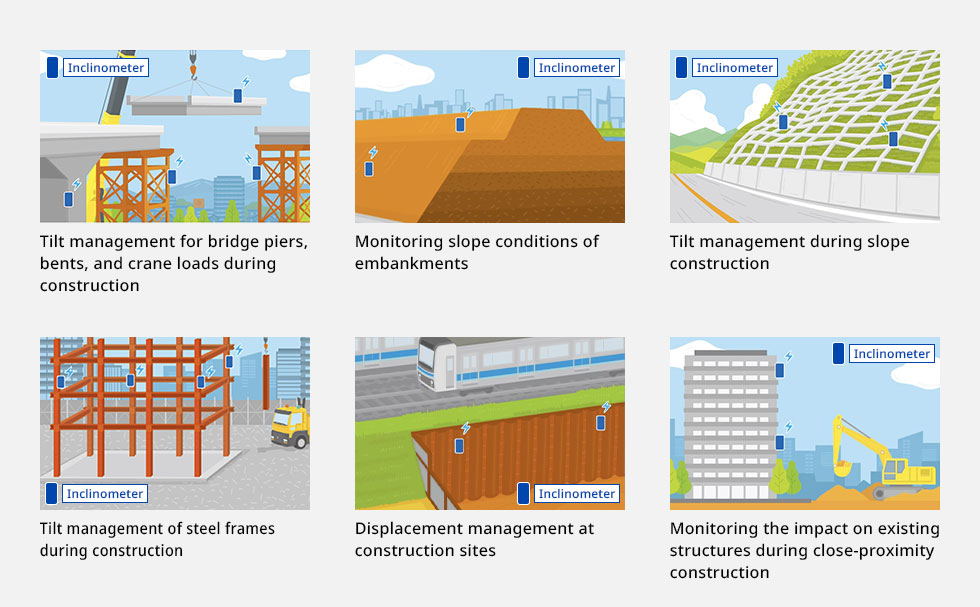
Among these, tilt is a key indicator of the integrity of ground and structures. Tilt measurement is already widely used to monitor construction sites for safety during construction, as well as bridges, tunnels, retaining walls, and other public infrastructure for maintenance purposes. When an anomaly occurs in the ground or a structure, subtle changes in inclination often appear as an early sign. Capturing these changes can therefore help detect anomalies at an early stage.
Because such minute changes in inclination are often impossible to identify visually, continuous monitoring with high-precision sensors is essential. Early detection of subtle changes and visualizing their data can help prevent serious accidents and support timely decisions on how to respond.
Remote monitoring enabled by TDK’s inclinometer
Conventional tilt monitoring has generally relied on periodic on-site inspections and manual measurements. Such methods, however, provide information only on the condition at the time of measurement, creating the possibility that the onset of an anomaly may go undetected. Wired systems, meanwhile, impose a significant burden in terms of cabling work and equipment management, limiting their practicality for deployment over wide areas. Moreover, as aging public infrastructure increases the number of structures requiring monitoring, efficient maintenance is becoming increasingly difficult using conventional operating methods alone. Continuous monitoring systems that combine wireless communication with automated measurement are gaining traction as a way to address these challenges.
TDK’s inclinometer builds on the company’s deep expertise in MEMS accelerometer technology, developed through its work on products for smartphones, automobiles, and other applications, to measure inclination in two axes with an accuracy of one-thousandth of a degree. Once installed at a site, the system automatically collects tilt data and enables remote, real-time monitoring. This makes it suitable for a wide range of applications, including safety monitoring at construction and civil engineering sites, public infrastructure maintenance, and disaster preparedness. By reducing reliance on human labor for monitoring, the system enables earlier detection of anomalies while enhancing safety.
A particularly significant strength of the system is its ability to reduce total costs through wireless connectivity. By substantially reducing cabling-related workloads, it can lower construction, equipment, and maintenance costs. Cases have also been reported in which installation and removal times were cut in half compared with wired systems.
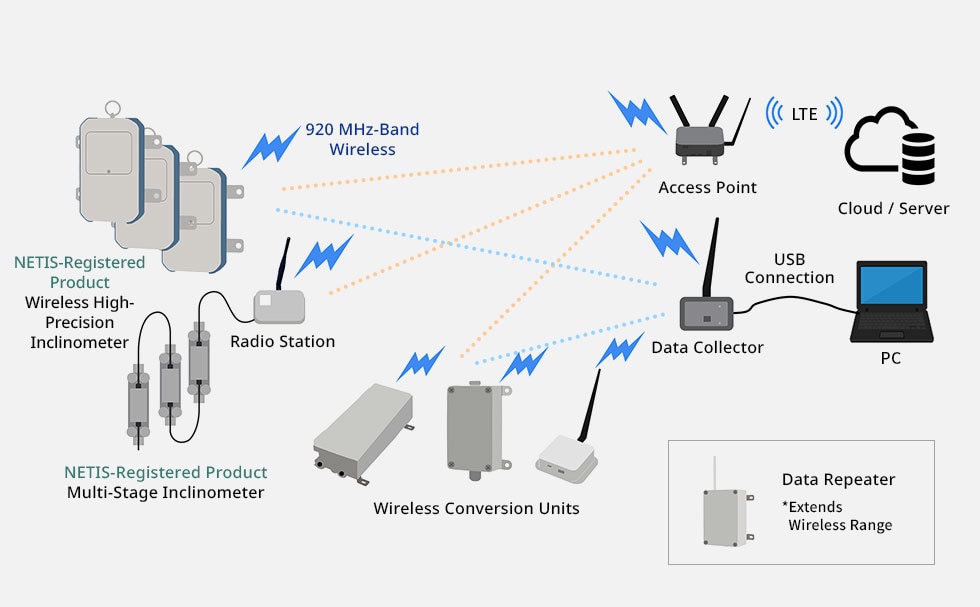
Example configuration of a wireless high-precision inclinometer
Inclinometer applications
From inclinometer-based tilt monitoring to preventive maintenance
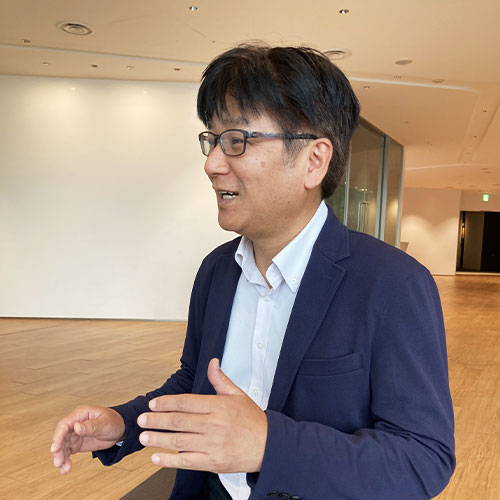
D.Eng., P.E.Jp (Civil Engineering)
Senior Chief Researcher
Construction & Environment Technology Research Department
Research & Development Institute
TAKENAKA CORPORATION
Takao Kono of Takenaka Corporation, which has implemented TDK’s inclinometer, described the experience. “To enable structures to remain in service for longer and to prepare for natural disasters, we are looking to expand health monitoring in the construction and civil engineering fields. At a site in Nagoya, we evaluated compact, lightweight, wirelessly connected equipment for about a year and a half and confirmed that they offered accuracy and stability equivalent to those of existing equipment. Because TDK’s measurement system can shorten installation time, I believe it will be useful at sites facing labor shortages or where installing wiring is difficult.”
Kono continued, “At the same time, I believe one reason digital transformation (DX) has not progressed further is that measurement data are only utilized for limited purposes, meaning there are relatively few benefits for those conducting the measurements. If measurement data could be accumulated over the long term, they could become a valuable asset for improving the reliability of future construction sites and reducing construction periods and costs. However, we have yet to demonstrate these benefits. Going forward, we would like to advance data management and analysis, as well as verify their effectiveness, so that we can accelerate the adoption of DX.”
Makoto Sekijima, Section Head of the Modular Sensing Unit in the Internal Incubation Department, Incubation Center, Technology & IP Headquarters, spoke about the inclinometer’s future. “TDK’s inclinometer visualizes data acquired by sensor devices and enables remote, real-time monitoring through wireless communication. Going forward, to meet customer needs, we plan to expand functions like anomaly detection and trend detection that can lead to predictive maintenance, developing the system into services that deliver greater added value. Through these efforts, we aim to contribute to more efficient safety monitoring of the ground and structures at construction and civil engineering sites and maintenance of public infrastructure, while providing next-generation solutions that support improved safety and more sophisticated maintenance practices.”
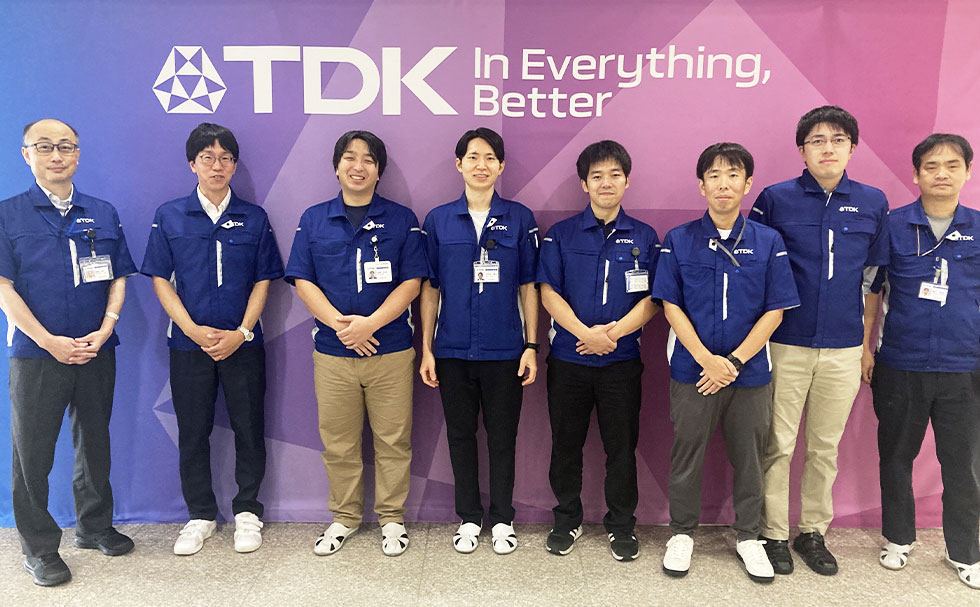
At present, TDK’s inclinometer is primarily being deployed in Japan, while validation testing is underway in Singapore. Full-scale overseas expansion remains under consideration. By leveraging its proprietary sensing technologies, TDK will continue to provide solutions that support safety at construction and civil engineering sites, the maintenance of public infrastructure, and the advancement of DX in construction worldwide—helping build a more sustainable future.
Summary
As labor shortages, aging public infrastructure, and growing disaster risks intensify, the need to monitor the ground and structures and maintain public infrastructure continues to grow. High-precision detection of minute changes in inclination that precede anomalies can contribute to accident prevention and predictive maintenance. TDK’s inclinometer incorporates a three-axis MEMS accelerometer capable of measuring tilt with an accuracy of one-thousandth of a degree. Continuous wireless monitoring reduces dependency on labor-intensive inspection while enabling earlier detection of anomalies and improved safety.
FAQ
Q: What is an inclinometer?
A: An inclinometer enables remote monitoring of changes in the tilt of the ground and structures at construction and civil engineering sites and in public infrastructure.
Q: What are the key features of TDK’s inclinometer?
A: The system achieves high-precision measurement using a three-axis MEMS accelerometer and proprietary data-processing technologies. It also uses wireless communication in the 920 MHz band, enabling long-distance data transmission without interference from Wi-Fi or Bluetooth. Data measured by multiple inclinometers can be consolidated on a cloud-based server or PC for centralized management.
Q: What benefits does the inclinometer offer for safety monitoring at construction and civil engineering sites and for maintaining public infrastructure?
A: The system helps improve monitoring efficiency while reducing dependency on manual inspection, enabling earlier detection of anomalies and improved safety. Wireless connectivity also reduces total costs by lowering construction, equipment, and maintenance costs.
Q: Is the inclinometer easy to install and operate?
A: Because the system is wireless, it reduces the installation workload compared with wired systems and facilitates deployment at construction and civil engineering sites. At the same time, data measured by multiple inclinometers can be consolidated on a cloud-based server or PC for centralized management.
Q: Where can I find specifications and more detailed information about the product?
A: For detailed information about the inclinometer, please visit the TDK Product Center
Related links