
sustainability | GovernanceRisk Management
Governance
Risk Management Structure
TDK has instituted systems to precisely identify significant risks in the Group’s business activities and
to implement appropriate responses to reduce impacts on the Group’s business in the unlikely event that a
risk materializes. We have also established an ERM Committee, chaired by a corporate officer appointed by
the President and CEO, to allow us to promote company-wide measures against factors (risks) which stand in
the way of the achievement of organizational goals, and to implement company-wide Enterprise Risk
Management (ERM) to appropriately manage these risks, in aiming for sustainable growth. Similarly, we have
established the Sustainability Committee (in April 2025), the Compliance Committee, the Information
Security Committee, and the Disclosure Committee as committees under the direct management of the
Executive Committee, and are thereby undertaking measures and responses to various issues. A corporate
officer serves as chair at each of these committees. (Refer to “Risk Management” section for details of
the organizational structure for risk management involving individual risks).
The ERM Committee reports to the Board of Directors on the significant risks assessed and identified
through ERM activities, including business and other risks disclosed in the annual Securities Report (19
risks in FY March 2026). Activities of the ERM Committee and the Compliance Committee are overseen by the
Board of Directors, by means of biannual reporting to the Board of Directors by both committees. In
addition, members of the Management Review & Support Group, an internal auditing unit, attend meetings of
the ERM Committee as observers, and monitor the Committee’s activities. The Full-time Audit & Supervisory
Board Member also performs monitoring of the ERM Committee, for example by meeting with the Committee’s
chair.
Sustainability Committee
The Sustainability Committee identifies sustainability-related risks and opportunities, defines the TDK Group’s key issues (materiality), implements progress management, makes adjustments in response to changes in the internal and external environment, and responds to the introduction of new sustainability-related regulations, with the aim of furthering both the sustainability of the TDK Group (i.e. the ability to grow corporate value over the long term) and the sustainability of society as a whole.
Enterprise Risk Management (ERM) Committee
In ERM Committee, we promote company-wide risk management in a way we analyze and evaluate company-wide
risk, identify risks which require countermeasures and decide a responsible function to be in charge of
risks. As for each risk, the responsible function takes the lead in countermeasures and the progress is
monitored in ERM Committee. We discuss the risk analysis evaluations and countermeasure situations at
the Executive Committee and report them to the Board of Directors.
Risks concerning sustainability, such as risks concerning corporate social responsibility, climate
change, securing personnel and training personnel are also allocated to risk owner departments and
Corporate Officers are assigned for them.
For more information on our risk management activities and major risks, please see the link below.
We have recognized as a recent emerging risk the fact that the U.S. is considering raising tariffs on products from other countries besides China. (As it not possible to accurately predict which countries and which products will be affected, we cannot assess the likely impact on the TDK Group. If the U.S. does raise import duty on TDK’s products, we will aim to reduce the impact by adjusting our logistics system, and by passing on the price increase to customers if necessary.)
Compliance Committee
Through the Compliance Committee, which aims to supervise compliance-related risk management and advance initiatives, TDK promotes prevention of violating laws and regulations, etc. and strengthens prevention of recurrence. The Compliance Committee approves company-wide compliance activity policies and plans, selects risks that we will focus on with respect to compliance, assigns individual risks to risk owner divisions, and provides instructions to and monitors risk owner divisions.
Information Security Committee
The Information Security Committee properly manages important information such as information provided by customers and personal information in compliance with laws and regulations, implements measures against cyber-attacks and internal information leakage, and monitors the security status of TDK to prevent cyber-attacks. In addition, in the event of an attack, the said Committee will promptly assess the situation, recover, and take measures.
Disclosure Committee
The Disclosure Committee deliberates on and examines important corporate information and disclosure materials of TDK that are required for investment decisions by shareholders and investors, to ensure that it discloses appropriate information in a comprehensive, accurate, timely and impartial manner, in accordance with various laws and regulations regarding securities transactions and the rules and regulations of the stock exchange on which its shares are listed.
Strategy
One of the key issues (materiality) to be addressed toward the realization of the TDK Group’s long-term
vision is the “enhancement of Group governance,” with “Empowerment & Transparency” set as one of the
themes of this issue.
In risk management, based on the concept of “Empowerment & Transparency,” we encourage appropriate
risk-taking (Value Creation) and prevent the impairment of corporate value (Value Protection).
Risk Management
The ERM Committee, under the direct management of the Executive Committee, clarifies the role (refer to
below table) of each organization in risk management activities and promotes the PDCA cycle of a series of
risk management activities, from identification of risks to evaluation, consideration of countermeasures,
implementation, monitoring, and improvement.
As a risk assessment, each term the residual risk (i.e., after control by the measures taken so far) is
examined from the perspective of the three elements of management resources (people, goods, and money),
relationships with internal and external stakeholders, reputation, and BCP. We calculate the magnitude of
the impact on the TDK Group from the above and combine it with the possibility of the risk materializing
to create a residual risk heat map to visualize and evaluate the priority of risk countermeasures. Among
these, the results of the assessment of critical risks and the status of countermeasures are deliberated
on by the Executive Committee and reported to the Board of Directors.
*For more details about risk management activities and major risks, please visit the following page.
Roles of each organization in risk management activities
| Divisions with jurisdiction over business execution (e.g. business groups and subsidiaries) |
Identify risks in day-to-day business operations and implement the necessary risk controls, as the first line of risk management |
|---|---|
| Divisions responsible for the Group’s headquarters function | Implement Group-wide risk management activities relating to risks for which they are responsible, as the division with ownership over risks, and monitor whether first line risks are being appropriately managed while also providing any necessary support, guidance, or cooperation, as the second line of risk management |
| Management audit group responsible for internal audits | Internally audits risk management activities by the divisions with jurisdiction over business execution (first line), headquarter function (second line), and the ERM Committee |
Initiatives
The secretariat of the ERM Committee drafts a list of risks and the associated risk scenarios that the TDK Group could potentially face in each term, and evaluates any residual risks that the Group could still face following the measures that have been implemented already, to facilitate implementation of the activities described in the “Risk Management” section above. For any residual risks that are felt to be relatively high, the headquarters function (or business group for certain risks specific to respective businesses), as the division with ownership over the risk at the Group level, first performs self-assessment of the likelihood of the risk becoming actualized, and of any vulnerabilities in the system for mitigating the potential impact if the risk does become actualized. After discussing the results of this assessment with the secretariat of the ERM Committee, measures are formulated and implemented to eliminate any vulnerabilities. With regard to other risks, the risk owner assesses the likelihood of the risk becoming actualized, and formulates and implements measures to mitigate the potential impact if the risk does become actualized.
Business Continuity
TDK has established a crisis management system to prevent secondary disasters and to ensure the safety
of team members in the event of an emergency, as well as to ensure business continuity in order to
fulfill its responsibility to continue supplying products to customers. We have established a Business
Continuity Plan (BCP) that is applicable to all emergencies globally, regardless of the type of disaster
or the cause event, and we are focusing on Business Continuity Management (BCM) activities to increase
effectiveness in case of emergencies, thus ensuring to the extent possible that prioritized works are
not interrupted at such times, or if they are, that they can be restarted as quickly as possible.
Specifically, in addition to holding regular BCM meetings at which we share business continuity issues
and manage their progress for each business division, we also conduct regular practice sessions and
drills premised on a variety of scenarios at respective business and factory units at least 30 times per
year. In addition, we continuously conduct practice sessions for the launch, establishment, and
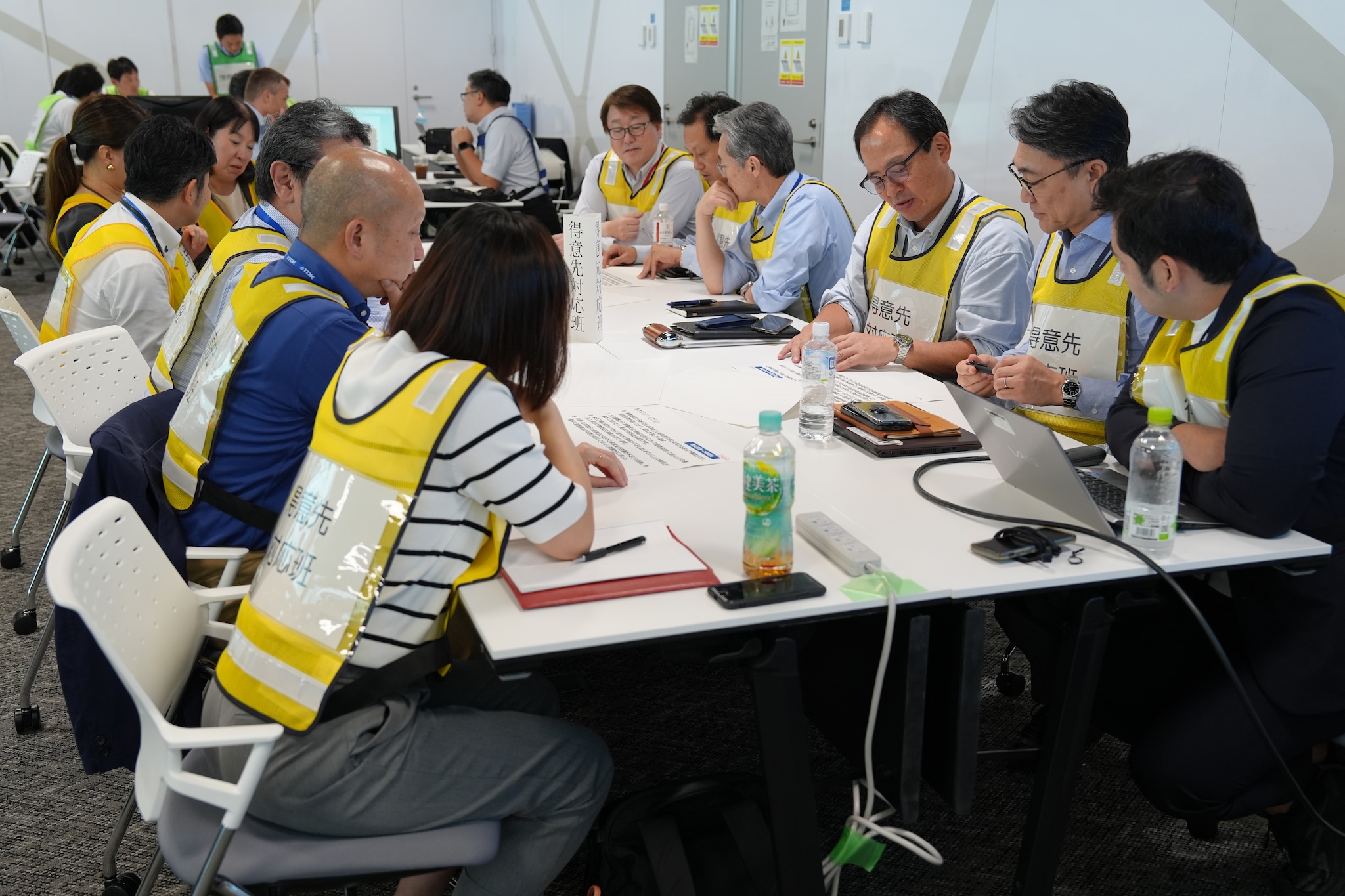
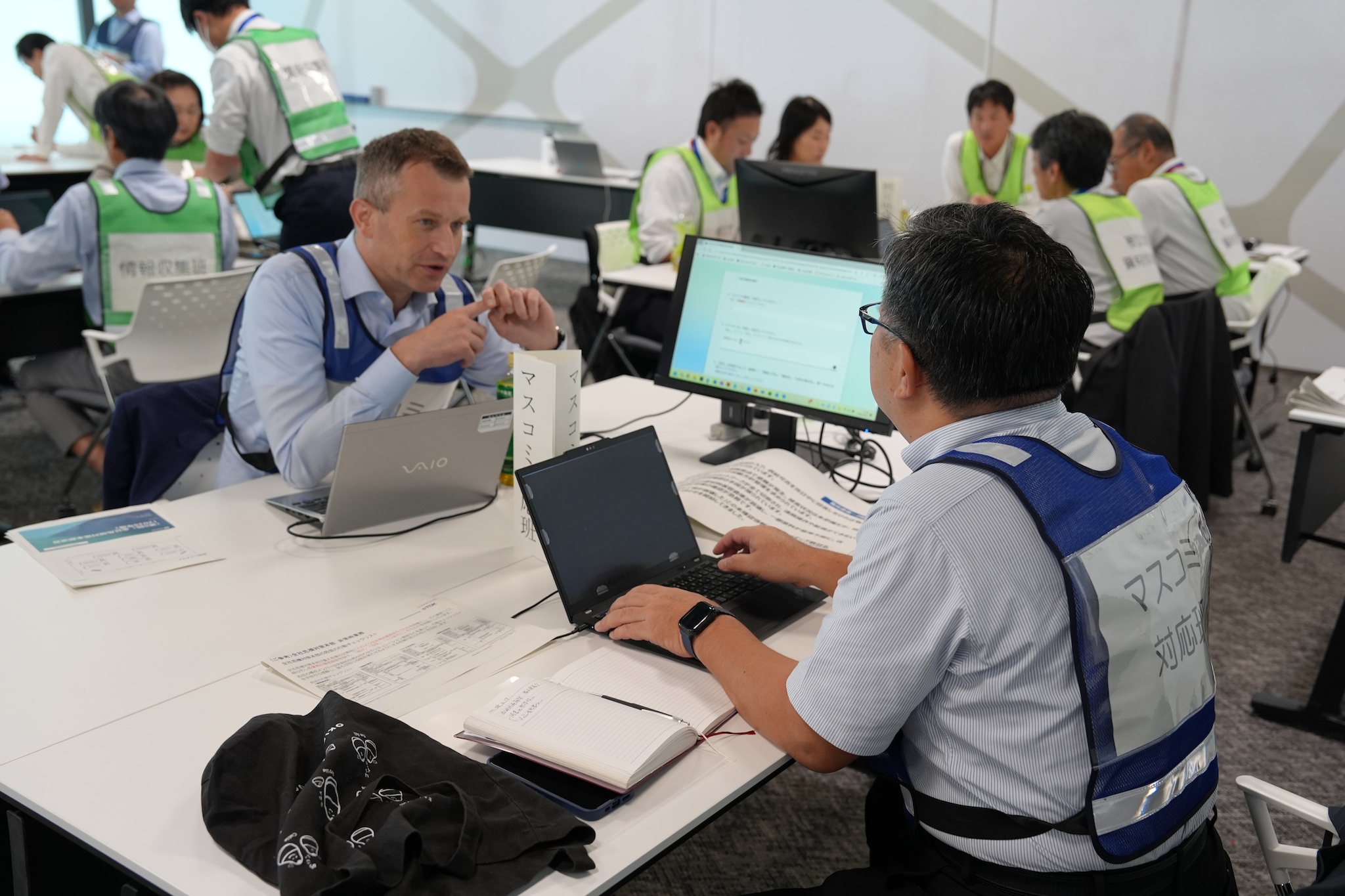
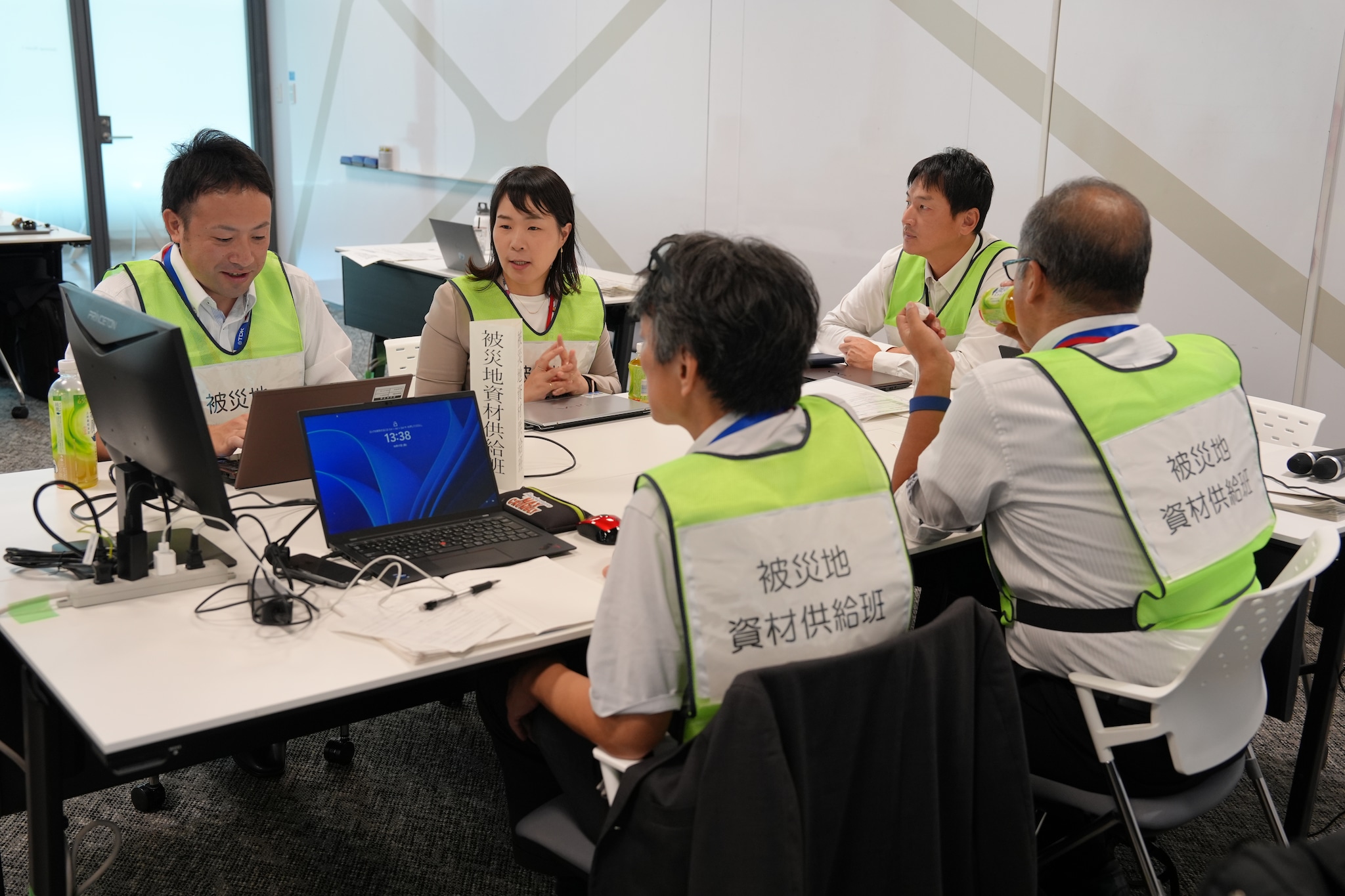
operation of the Corporate Crisis Management Headquarters, which would be led by the President and CEO
in the event of a major emergency. TDK positions practice sessions and drills of this kind as a central
measure of our BCM activities, and we will continue to strive for day-to-day improvements in the
effectiveness of our BCP for emergency situations.
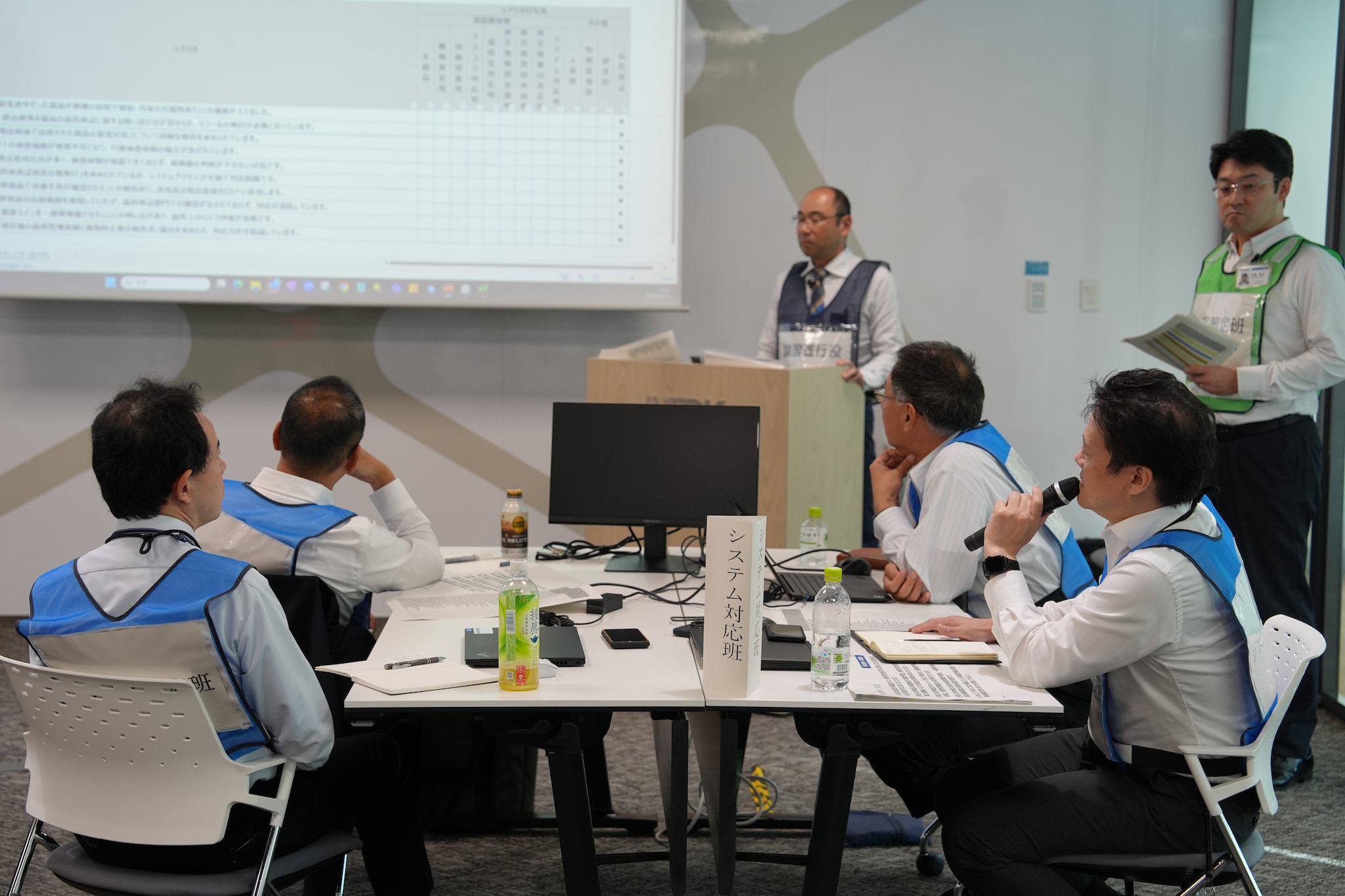
Example of implementation: Corporate Crisis Management Headquarters simulation drill held in October 2025
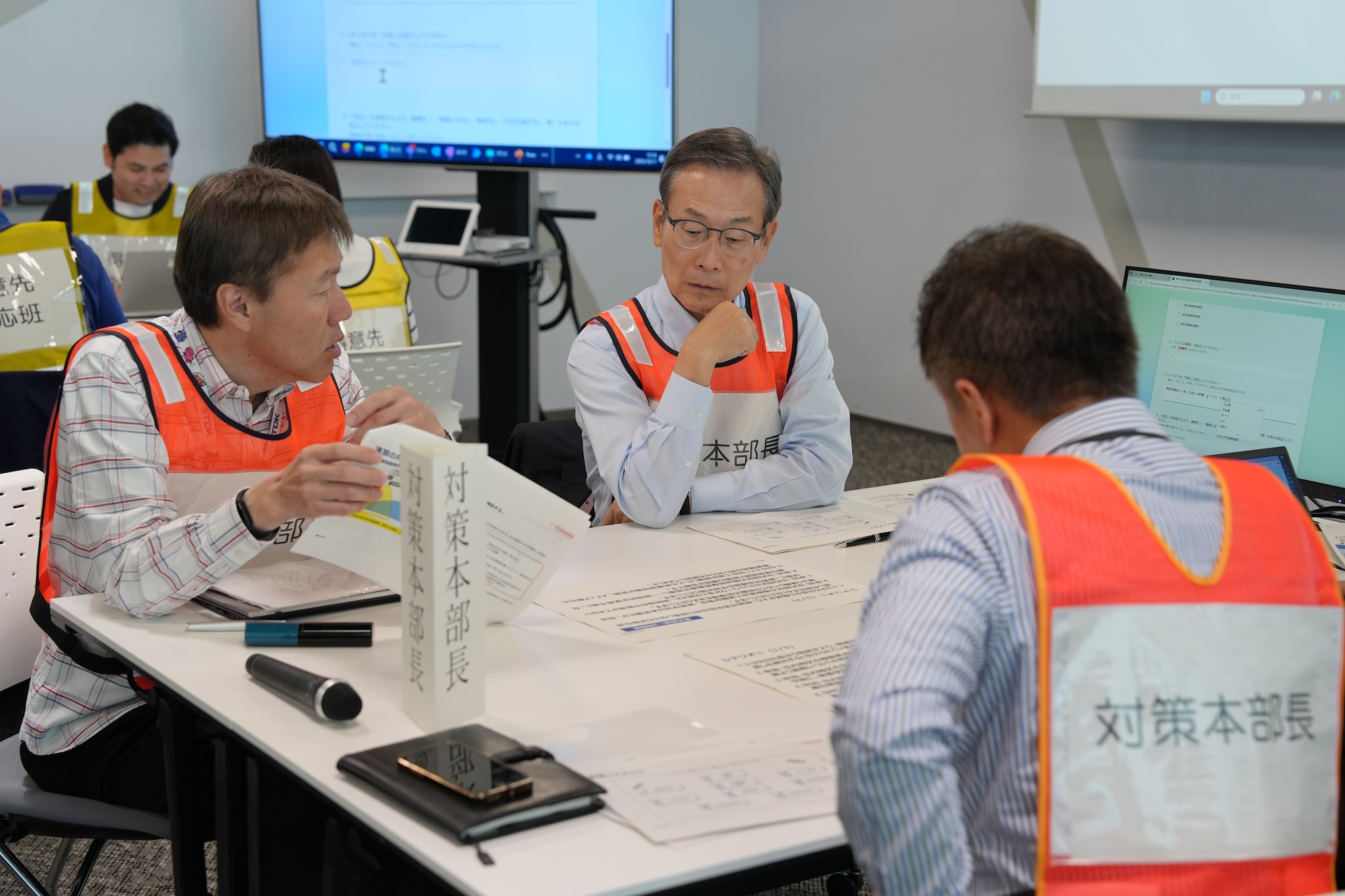

* Chief Officer of Quality, Safety & Environment


Education and Awareness Raising
TDK provides ongoing training and education for directors, management, and team members (employees) including lectures led by external experts, toward raising awareness and facilitating the achievement of a more accurate understanding of risk management.
- Lectures by external experts on geopolitical risks (for All Directors and Audit & Supervisory Board Members)
- e-learning


