
Sustainability | SocialRespect for Human Rights
- Our Approach
- Governance
- Risk Management
- Identification and Evaluation of Human Rights Risks
- Metrics and Goals
- Initiatives
- Communication with external parties
- Collaborative Initiatives
- Grievance Mechanism
Our Approach
Understanding of Global Trends on Human Rights Issues
Since the UN Human Rights Council adopted the “protect, respect, and remedy” framework, known as the Ruggie Framework, with regard to business and human rights in 2008, a series of international Corporate Social Responsibility (“CSR”) guidelines and UN and EU policies have been introduced in accordance with the framework, and countries throughout the world have enacted laws addressing human rights in the context of international business. These laws require companies to specifically identify human rights issues in their business activities and take appropriate action.
Our Policies for Respecting Human Rights
The TDK Group Code of Conduct states that “The TDK Group shall respect and uphold international norms regarding human rights. In addition, based on the recognition that it is important to understand the potential impact of all corporate activities on human rights and to conduct activities to prevent and mitigate adverse impacts, the TDK Group shall continuously administer human rights due diligence within the value chain to fulfill its responsibilities.” To that end, TDK Group Code of Conduct provides that “The TDK Group shall not tolerate any form of inhumane labor including child labor and all types of forced labor or human trafficking,” and that “The TDK Group shall comply with applicable laws and regulations regarding minimum wages, working hours, and other protections for workers.” TDK respects such internationally recognized human rights, as respect for freedom of association and right to collective bargaining. The TDK Group Code of Conduct also states that “The TDK Group shall take measures to remedy, correct, improve, and prevent recurrence if the TDK Group recognizes that its corporate activities have caused or contributed to adverse human rights impacts. In addition, the TDK Group shall enhance effective mechanisms to enable quick actions concerning any comments related to human rights, and to remediate the issue if any.”
The TDK Group Policy on Human Rights was formulated in 2016. TDK respects and supports international norms on human rights including the International Bill of Human Rights, the ILO Declaration on Fundamental Principles and Rights at Work, the OECD Guidelines for Multinational Enterprises, and the Children’s Rights and Business Principles. Based on the framework of the UN Guiding Principles on Business and Human Rights (UNGP), TDK promotes the correct understanding of potential human rights issues and takes steps to address them, not only within the business operations of TDK itself but also throughout the value chain.
The "TDK Group Human Rights Policy" is published on our website and communicated to internal and external stakeholders. We expect all stakeholders, including our business partners and suppliers, to understand and support this policy, and we request that their responses be in compliance with the TDK Group Business Partner Code of Conduct, including the prohibition of unreasonable restrictions on movement leading to child labor, forced labor, or compulsory labor, and the respect for freedom of association and the right of collective bargaining.
Related links
Governance
TDK promotes human rights initiatives under the responsibility of the Sustainability Committee Chair (Corporate Officer). The Sustainability Management Group within the Corporate Strategy Headquarters works in close collaboration with relevant functions to advance these ongoing initiatives and day-to-day operations. Group-wide sustainability policies, including human rights initiatives, are discussed and deliberated by the Sustainability Committee under the direct control of the Executive Committee, and are subsequently submitted to both the Executive Management Meeting and the Board of Directors Meeting. The Board of Directors reviews these submissions and, when necessary, undertakes further deliberations and makes resolutions.
In FY March 2026, two topics relating to human rights were deliberated on and examined by the Sustainability Committee.
Risk Management
Due Diligence Process
TDK undertakes human rights due diligence processes and promotes its due diligence activities in line with the procedures set out in the UNGP and the OECD Due Diligence Guidance for Responsible Business Conduct. We also continue to dialogue with internal/external parties including human rights specialists and stakeholders to make our activities more effective.
Human Rights Due Diligence Process of the TDK Group

- TDK Group Code of Conduct
- TDK Group Policy on Human Rights
- TDK Group Business Partner Code of Conduct

- Identify potential human rights issues in the value chain
- Evaluate risks by probability, human rights impact, and scale of our company’s leverage
- Prioritize key themes based on risk evaluation result
- Assess detailed risks for each key theme
- Assess potential human rights risks in potential new business relationships created through M&A and similar transactions

- Implement measures for each key theme and periodic review
- Training

- Sustainability Website
- Human Rights Statement
Identification and Evaluation of Human Rights Risks
Human Rights Key Themes of the TDK Group
TDK periodically reviews the issues which could present potential human rights risks and the groups of people who might be vulnerable to such risks through dialogues with external parties, reports from international human rights organizations and conducting risk assessments and CSR self-checks.
Additionally, when new business relationships arise, we conduct human rights risk assessments. For example, during due diligence in mergers and acquisitions, we investigate the status of human rights initiatives, working conditions, occupational health and safety, and compliance with relevant laws to ensure that there are no significant human rights risks in companies joining the group.
In FY March 2024, as we reviewed key issues (materiality) in the formulation of a new Medium-Term Plan to begin from FY March 2025, we conducted reassessments of "Potential human rights risks that may be addressed by the TDK Group" and “human rights key themes.”
We identified stakeholders and human rights risks potentially impacted by the TDK Group's activities in the upstream, internal, and downstream value chains and confirmed consistency with "Potential human rights risks that may be addressed by the TDK Group."
Potential human rights risks that may be addressed by the TDK Group
| Value chain | Procurement | Development and Manufacturing | Sales | ||
|---|---|---|---|---|---|
|
Potentially affected stakeholders
Potential human rights risks
|
Employees of sub-contractors, suppliers and labor agencies | Communities/Indigenous peoples | Group employees | Communities/Indigenous peoples | Customers/End users |
| Product safety | - | - | - | - | 〇 |
| Human rights infringement by unintended use of products and technologies | - | - | - | - | 〇 |
| Protection of personal information and privacy | 〇 | - | 〇 | - | 〇 |
| Child labor, forced labor and human trafficking | 〇 | - | 〇 | - | - |
| Working hours and fair wage management | 〇 | - | 〇 | - | - |
| Occupational safety and health | 〇 | - | 〇 | - | - |
| Unfair treatment of foreign workers | 〇 | - | 〇 | - | - |
| Discrimination (treatment of employment, pay, training, promotion, etc.) | 〇 | - | 〇 | - | - |
| Freedom of association and the right to collective bargaining and concerted action | 〇 | - | 〇 | - | - |
| Harassment | 〇 | - | 〇 | - | - |
| Responsible sourcing of minerals | 〇 | 〇 | - | - | - |
| Impact on employment by establishment, closing and consolidation of facilities | 〇 | 〇 | 〇 | 〇 | - |
| Infringement of local residents' rights by inappropriate environmental management in a factory (health hazard, degradation of daily life environment and decrease in assets, etc.) | - | 〇 | - | 〇 | - |
Next, we did scoring and assigned prioritizations from the perspectives of severity of impact and probability of occurrence, and confirmed that they matched with “human rights key themes.” Furthermore, based on the results of reports from international human rights groups; the risk assessments for labor and business ethics, CSR self-checks, and audits at manufacturing sites; and reviews by external experts, we conducted an analysis of vulnerable stakeholders and redefined our “priority issues on which to focus.” As a result, we recognized three priority issues: “responsible sourcing of minerals,” “respecting human rights of employees at our manufacturing sites,” and “respecting human rights of employees at suppliers (including manufacturing sub-contractors and labor agencies).” We identified specific human rights key elements to address within these three priority issues and are working on preventive and mitigation measures and monitoring progress. We will continue to conduct regular reevaluations.
Human rights key themes
| Human rights key themes | Specific human rights key elements | Measures taken by TDK |
|---|---|---|
| Responsible sourcing of minerals | ・Child labor, forced labor, human trafficking | Responsible Sourcing of Minerals |
| Respecting human rights of employees at our manufacturing sites |
・Working hours ・Occupational safety and health ・Discrimination (treatment of employment, pay, training, promotion, etc.) ・Harassment |
Social and Environmental Consideration at Manufacturing Sites |
| Respecting human rights of employees at suppliers (including manufacturing sub-contractors and labor agencies) |
・Working hours ・Occupational safety and health ・Discrimination (treatment of employment, pay, training, promotion, etc.) ・Harassment ・Unfair treatment of foreign workers ・Child labor, forced labor, human trafficking |
Sustainable Procurement |
Approach to Specific Human Rights Key Elements
Prohibition of Child Labor and Forced Labor
The TDK Group Code of Conduct clearly prohibits any form of inhumane labor, including child labor and all types of forced labor*, as well as human trafficking, and TDK takes various measures to prevent their occurrence. For example, to address and prevent the risk of child labor, we conduct regular verification of official documents and employee interviews at all manufacturing sites to prevent impersonation before and during employment. Furthermore, if employees below the working age are found, procedures are in place to provide educational training instead of employment and to cover the related costs to resolve the issue.
Thanks to such measures, no child labor was found during FY March 2026 at TDK. We also perform checks to reduce the risk of actions that may be related to forced labor, such as requiring employees to hand over the original of their government-issued ID document (except where required by law) or requiring the payment of recruitment fees, and we are making a serious effort to prevent forced labor.
In addition, the TDK Group Business Partner Code of Conduct also requires our business partners to comply with these principles.
*Forced Labor refers to any labor that is coerced, such as by threat or intimidation of punishment, and is not voluntarily offered.
(Example: As a measure of compelling involuntary labor, to collect recruitment fees from workers, to restrict workers' freedom of movement unreasonably, and to hold/destroy/conceal/confiscate workers' government-issued identification cards, etc.)
Working Hours and Fair Wage Management
At each site, the principle of equal pay for equal work is respected, based on the relevant labor laws and regulations in that country, and appropriate wages, allowances, bonuses, other temporary payments, and retirement benefits are defined in work rules and labor agreements (such as collective labor agreements). We comply with all wage-related laws concerning minimum wages, statutory benefits, overtime, etc., in each country and have internal regulations or procedures to ensure compliance with these laws. Employees are notified of their wages through pay slips or electronic data and are paid directly within the prescribed pay period and time. In addition, we protect employees’ rights in relation to the granting of paid annual leave and payment for overtime work. Measures are also taken to prevent excessive labor hours beyond legal limits, with risk-specific countermeasures at each manufacturing site. For example, if there is a 60-hour or lower work hour limit as stipulated by the Responsible Business Alliance (RBA) Code of Conduct, we notify relevant employees to prevent exceeding these limits. Additionally, in countries with a high risk of excessive labor, the headquarters' human resources function (global HR) continues monitoring.
For suppliers, the TDK Group Business Partner Code of Conduct outlines our stance on long working hours, overtime, compensation, and minimum wages.
Occupational Safety and Health
Recognizing that a safe and healthy working environment is critical for protecting our employees and therefore is of the utmost importance to TDK, TDK promotes safe and healthy working conditions in line with the TDK Group Occupational Health/Safety and Environmental Charter, which was updated in 2022. We also established a ‘Health and Safety’ agenda in the TDK Group Business Partner Code of Conduct and indicate our approach for identification and reduction of potential safety risks in the working environment, response to emergencies, occupational accidents and diseases, internal communication for safety and health, etc.
Related link
Protection of foreign workers
Regarding foreign workers from third countries, especially unskilled workers who are socially and economically disadvantaged and thus more vulnerable to forced labor and human trafficking, we take necessary measures in relation to the risk of human rights infringements affecting foreign workers so as to prevent abuse, ensure respect for human rights, and correct abuses in the supply chain. These measures include signing employment contracts in a language that the employees can understand.
Prohibition against discrimination
The TDK Group Code of Conduct stipulates that “The TDK Group shall not engage, directly or indirectly, in any discrimination based on race, color, age, gender, sexual orientation, gender identity, gender expression, ethnicity or national origin, disability, pregnancy, religion, political affiliation, union membership, covered veteran status, protected genetic information, or marital status, and ensure equal opportunities in hiring and employment practices such as wages, promotions, rewards, education, and training.” We also require the same protections in the TDK Group Business Partner Code of Conduct. In its business activities (including contracting and subcontracting relationships), TDK focuses not only on profitability, but also on compliance with laws and regulations and respect for human rights and labor rights on the part of our procurement partners, and so we expect our business partners to abide by the Code of Conduct.
Freedom of association and the right to collective bargaining and concerted action
At TDK Corporation and some subsidiaries, there are employees who are members of labor unions.
TDK Corporation holds regular labor-management council meetings, at which management issues are shared and discussions are held regarding working conditions, etc. We strive to build and maintain a relationship of trust between labor and management through communication via various consultative bodies of this type.
The TDK Group Code of Conduct stipulates that harmonious labor-management relations be maintained through open communication between employees or their representatives and management regarding working conditions and business practices, without fear of discrimination, reprisal, intimidation, or harassment. This applies even at subsidiaries in countries or regions where the formation of labor unions is not permitted by law or labor practices, and to employees who are not members of a labor union.
Environmental risks that may lead to human rights violations
With regard to environmental risks that may lead to human rights violations, TDK identifies such risks at each manufacturing site in accordance with ISO 14001 and implements necessary risk mitigation measures. In addition, the TDK Group Business Partner Code of Conduct contains an ‘environment’ component that reflects our approach requiring the proper management of chemical substances and other potentially harmful substances that may pose a risk to the human body and the environment.
Metrics and Goals
Goals and Achievements in FY March 2026
Initiatives
Initiatives for Prevention and Reduction of Human Rights Risks
With regard to issues that need to be prioritized as being of key importance, TDK undertakes activities aimed at preventing and mitigating risk, referencing the UNGP and the RBA Code of Conduct, assessment items and audit framework. In 2020, TDK joined the RBA, an organization which is dedicated to improving social, environmental and ethical conditions in the global supply chains. TDK utilizes the RBA Code of Conduct as the standard to promote our CSR activities at manufacturing sites. The details are as follows.
Related link
Responsible Sourcing of Minerals
TDK started its response to the problem of conflict minerals following the enactment of the US Dodd-Frank Wall Street Reform and Consumer Protection Act in 2010. In April 2013, we formulated the TDK Group Policy on Conflict Minerals, established a survey and response system at each Group company, and have carried out initiatives in line with the Due Diligence Guidance of the Organisation for Economic Co-operation and Development (OECD).
Considering that the scope of discussions on responsible sourcing of minerals has recently expanded to conflict-affected and high-risk areas for serious human rights violations or environmental pollution, to avoid being complicit in these problematic activities we revised our policy, which is now entitled the “TDK Group Policy on Responsible Sourcing Minerals” in January 2019. Under this revised policy, TDK continues to promote responsible sourcing of minerals throughout the supply chain, including minerals such as tantalum, tin, tungsten, gold, cobalt, mica, copper, graphite, lithium and nickel which pose an increased risk of being sourced from conflict areas and regions with high risks of misconduct, including human rights abuses and environmental destruction.
For more details, please see the following:
Respecting Human Rights of Employees at Our Manufacturing Sites
TDK recognizes that, in our role as a supplier, striving to give due consideration to social and environmental concerns at TDK Group manufacturing sites, and fulfilling our responsibilities to society, is very important for the long-term continuation of our business. Using a three-stage framework that covers self-assessment, auditing, training and dialogue, we strive to identify problems and realize continuing improvement.
Every year, we implement CSR self-checks and labor/corporate ethics risk assessment at all our manufacturing locations, based on the RBA framework. These activities are overseen by the Safety & Environment Group at the head office. In addition, we aim to ensure that every manufacturing site undergoes of the following at least once every three years: an RBA certification audit, a CSR audit conducted by a customer, or a simplified CSR assessment based on the RBA auditing criteria. If problems are discovered at a manufacturing site while implementing these activities, we will consider appropriate response measures and implement corrective action.
For more details, please see the following:
Respecting Human Rights of Employees at Business Partners (Including Manufacturing Sub-contractors and Labor Agencies)
The TDK Group will be working together with its business partners to not only comply with legal requirements and social norms, but also to live up to social responsibilities to respect human rights and help safeguard the global environment.
As an enterprise that has production sites all over the world, the TDK Group has drawn up the TDK Purchasing Policies in line with the Group’s Global Partnership Purchasing (Purchasing Principles), and conducts purchasing activities in accordance with these Policies.
In addition, the TDK Group is working to realize continuing improvement through the implementation of a two-stage process of self-assessment followed by auditing, referencing the RBA criteria and taking into account the current state of transactions with (and business content of) materials suppliers, manufacturing sub-contractors, and labor agencies.
For more details, please see the following:
See also information on human rights considerations throughout the supply chain.
Related link
Training
TDK raises awareness of human rights issues through e-learning or in person training that is given to all of our employees in key roles, including those in the UK. In addition, we have also been able to identify issues through training of internal CSR auditors based on RBA requirements and by CSR training that takes regional characteristics into consideration. In the supply chain, TDK provides educational tools as necessary to promote awareness at the time of implementing CSR self-checks.
In FY March 2026, TDK implemented the following activities:
- We conducted CSR internal auditor training on a global scale, with a total of 185 employees taking part
- We implemented a business ethics e-learning program for all TDK Group employees
- Members of the Sustainability Management Group took part in training provided by the UNDP’s B+HR Academy
- A member of the Sustainability Management Group attended the 14th United Nations Forum on Business and Human Rights, which was held in Geneva in November 2025
Communication with External Parties
Dialogue
TDK engages in regular dialogue with external experts regarding the promotion of human rights.
Through this dialogue, TDK receives assessments and recommendations on its existing initiatives, deepens its understanding of human rights issues, and leverages these insights to further enhance its future initiatives.
In FY March 2026, TDK held the following dialogue:
- Mr. Yusuke Yukawa, an attorney-at-law at Nishimura & Asahi (Gaikokuho Kyodo Jigyo), took part in a dialogue with the Corporate Officer who chairs TDK’s Sustainability Committee, on the topic of “The human rights promotion measures that global enterprises need to take, and the role of senior management”
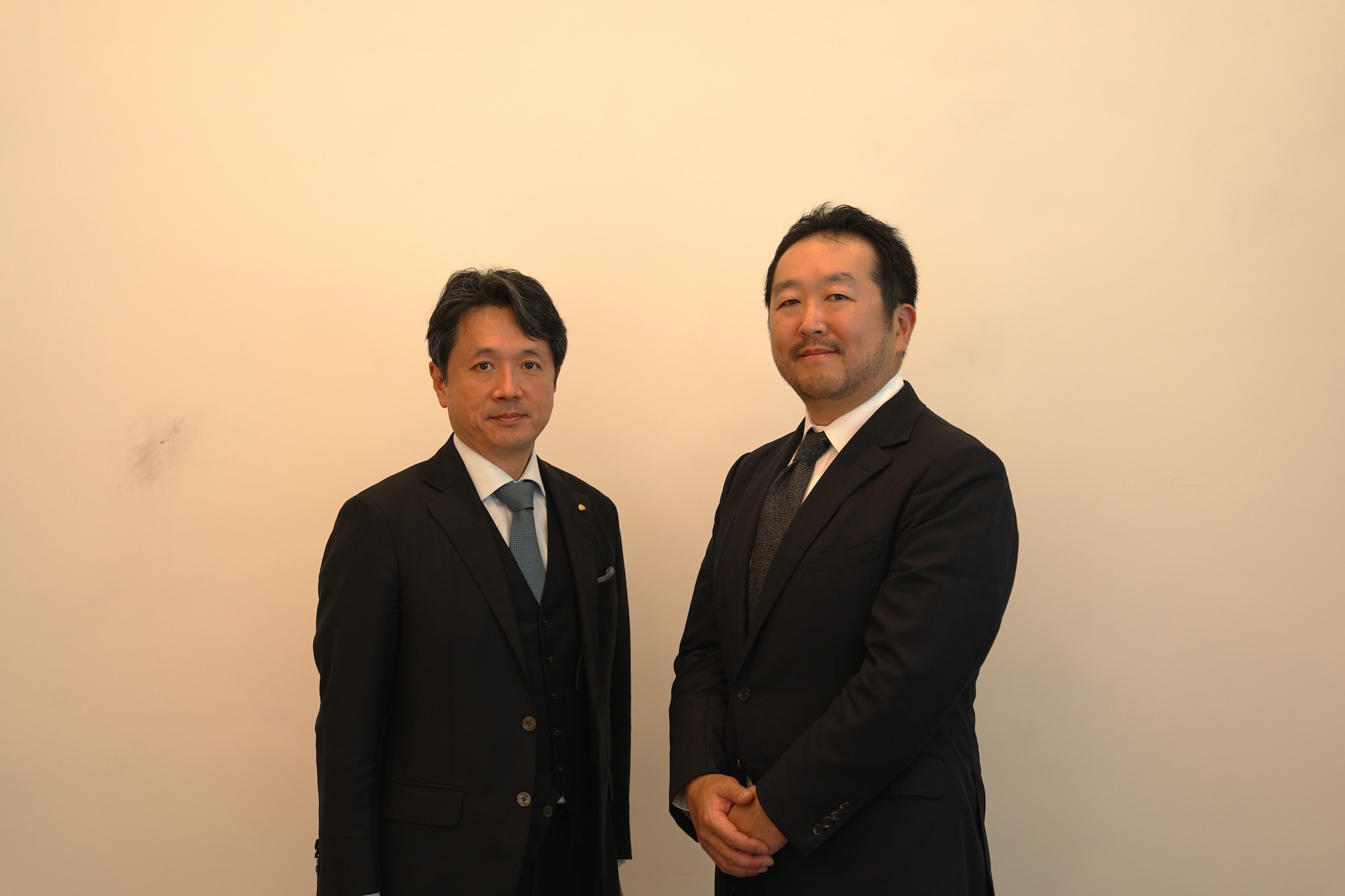
Right: Mr. Yusuke Yukawa (Attorney-at-law, Partner and Yangon Office Representative, Nishimura & Asahi (Gaikokuho Kyodo Jigyo)
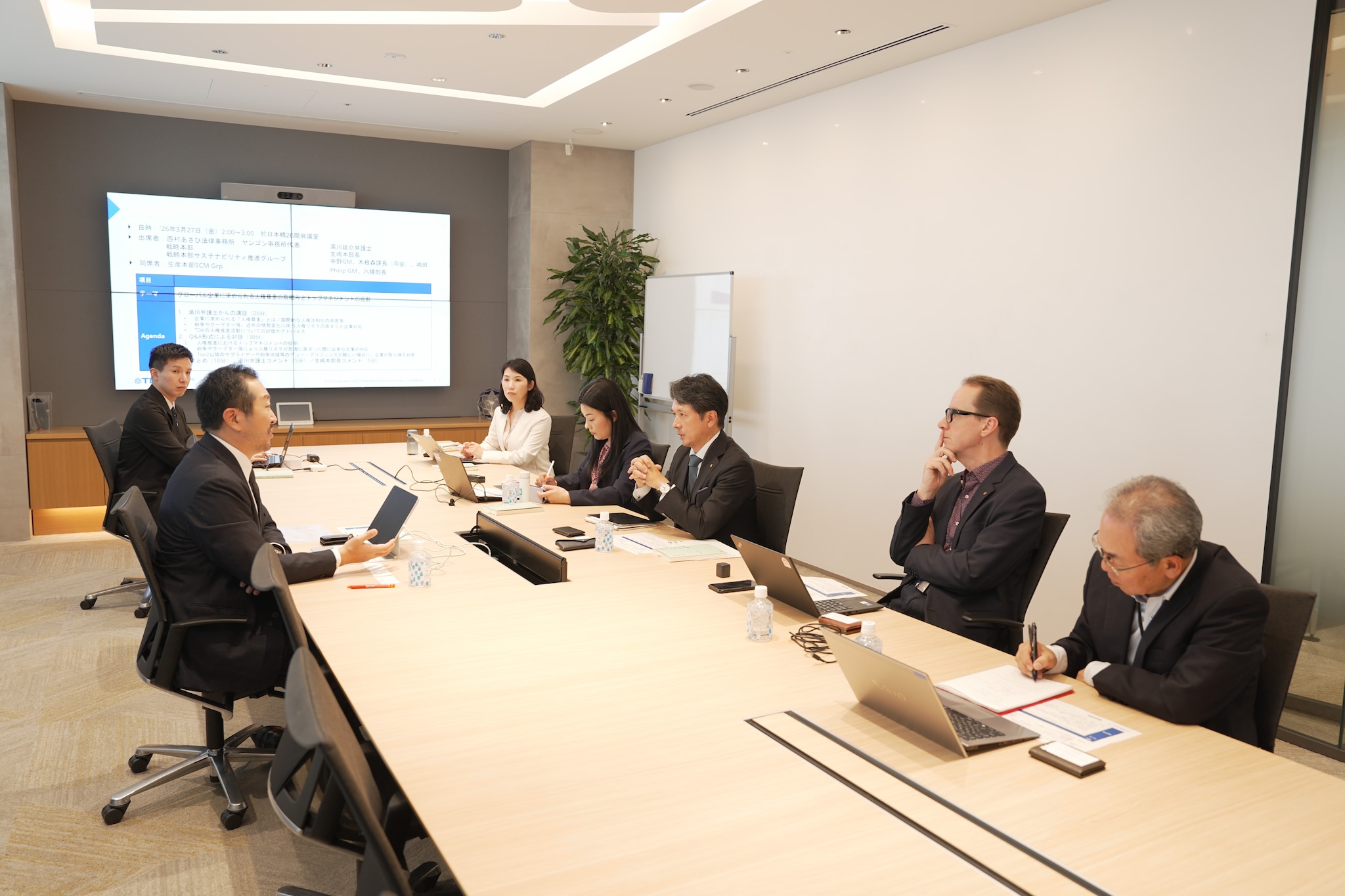
For more details, see the PDF noted below.
Dialogue Held in the Past
2024
Responding to recent trends relating to business and human rights, a dialogue was held between TDK senior managers and external experts on human rights regarding the strategy that TDK should adopt. Through this dialogue, besides confirming the appropriateness of TDK’s initiatives in light of international expectations and trends, we also obtained insights regarding the company’s future strategic direction.
2023
Participated in the Human Rights Due Diligence Workshop, organized by the Caux Round Table Japan. Worked to grasp human rights risks through exchanges of views with NGOs and experts (10 organizations), and to identify human rights issues in the manufacturing industry and in the chemicals and construction materials industries through discussions with participating companies (31 companies).
Related links
2021
Study session on human rights issues in the supply chain
Invited an outside expert on human rights issues in the supply chain and held a study session attended by senior managers of the global procurement function.
2017
Targeting Human Rights Responses at the Supply Chain
Invited two outside experts on human rights to attend a study session on the role required of TDK in response to human rights in the supply chain.
Related link
2015
CSR Promotion in the Supply Chain
Invited an outside expert on human rights for an exchange of opinions concerning what is expected of TDK to promote CSR in the supply chain.
Related link
2014
Identification of Human Rights Issues through Dialogue with Stakeholders
Engaged in a dialogue with experts on human rights to identify human rights issues relevant to TDK.
Related link
2013
Human Rights Due Diligence Workshop (Caux Round Table Japan)
Participated in the Human Rights Due Diligence Workshop, organized by the Caux Round Table Japan. We worked to grasp human rights risks through an exchange of opinions with NGOs and experts (10 associations), while identifying human rights issues in manufacturing through discussions with members from nine participating companies.
Related link
Collaborative Initiatives
In February 2020, TDK joined the RBA and committed to work continuously to improve our activities throughout our supply chains, including those involving human rights issues, in line with the RBA Code of Conduct.
For responsible sourcing of minerals throughout the whole supply chain, TDK has been participating in the Responsible Minerals Initiative and the Responsible Minerals Sourcing Trade Working Group of JEITA (Japan Electronics and Information Technology Industries Association) since 2011.
Related link
Grievance Mechanism
TDK has put in place a framework for responding to complaints and concerns raised regarding human rights by all internal and external stakeholders.
When a complaint or concern is received, we ensure the anonymity of the reporting party and the confidentiality of the information received, while also prohibiting the taking of any adverse action against the reporting party. An investigation is conducted in response to the complaint or concern, and appropriate action is taken. If it becomes apparent that TDK’s business activities have had a negative impact on human rights, or that TDK has been involved in a negative impact on human rights, then we take corrective or remedial action.
In FY March 2026, we continued to respond as outlined above to all inquiries regarding human rights received from internal and external stakeholders.
Reporting Channels
For all stakeholders
* TDK team members (employees) are requested to submit reports using the TDK helplines given below.
Japan Center for Engagement and Remedy on Business and Human Rights (JaCER) "Engagement and Remedy Platform"
The Japan Center for Engagement and Remedy on Business and Human Rights (JaCER) is an organization that aims to provide a non-judicial "Engagement and Remedy Platform" for redress of grievances and to act in a professional capacity to support and promote redress of grievances by member companies based on the United Nations Guiding Principles on Business and Human Rights. By using a third-party contact window to receive complaints and concerns regarding human rights, TDK aims to ensure fairness and transparency, and to respond to human rights related requests in an appropriate manner.
JaCER’s system and process for responding to complaints is outlined in the PDF referred to below.
Sustainability Contact Form
Inquiries can be handled in three languages: Japanese, English and Chinese. Starting from FY March 2026, the functionality of the system has been expanded to support anonymous reporting.
For officers and team members working within the TDK Group, and for contract workers and employees of contractors
TDK helplines
Information about helplines is provided using posters, on the TDK intranet, and on distributed helpline cards.


