
Chip-Sized Solid-State Battery Opens Door to New IoT Era
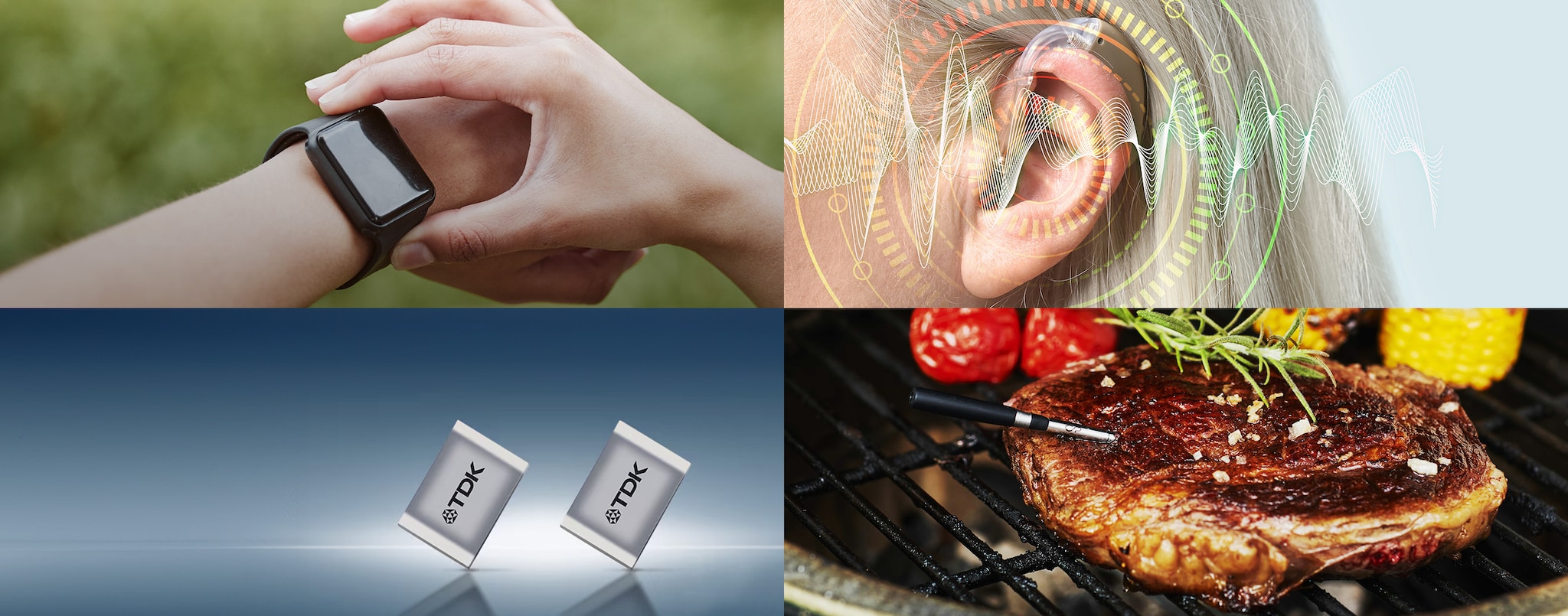
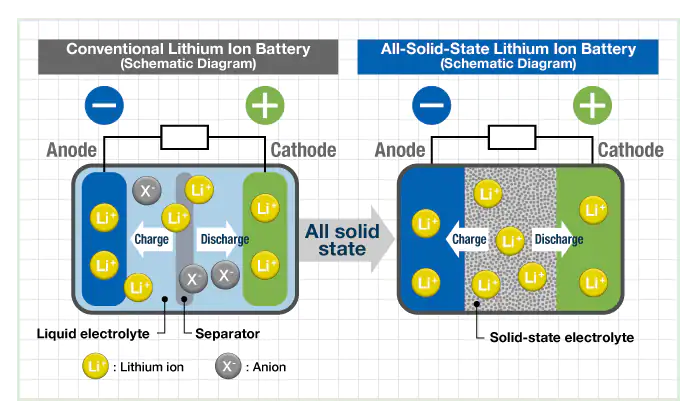
Solid-state batteries, an alternative to rechargeable lithium-ion batteries widely in use today, are undergoing intense development all around the world. These next-generation batteries are based on solid electrolyte material instead of liquid electrolytes, promising far superior safety and reliability, as well as longer lifespans. In 2020, TDK successfully commercialized the world’s first all-ceramic, solid-state SMD*1 battery, CeraCharge®. Furthermore, in 2024, the company successfully developed a new solid-state battery material with an energy density approximately 100 times greater than conventional products. Development is ongoing for batteries that can replace the existing coin cell batteries found in wireless earphones, hearing aids, smartwatches, and other wearable devices.

Key Takeaways
- Solid-state innovation: Replaces liquid electrolytes with solid ones for safer, longer-life power.
- TDK’s CeraCharge (2020): All-ceramic SMD cell, 1.5 V / 100 μAh, 4.5×3.2×1.1 mm.
- 2024 breakthrough material: Oxide electrolyte + Li-alloy anode, ~100× energy density.
- No leakage or fire risk: Chip form factor suits dense, rugged IoT deployments.
- Early use case: Wireless cooking thermometer; next targets include coin-cell wearables.
- Future roadmap: RTCs, smart sensors, and meters as disposables shift to rechargeables.
Solid-state batteries: The next-generation solution that overcomes the challenges of conventional lithium-ion batteries
In the IoT era—where almost everything is connected to the Internet—it’s no exaggeration to say that the key to full-scale adoption lies not only in miniaturization and better connectivity but in battery performance. Lithium-ion batteries, which feature high energy density, are commonly used in various electronic devices like laptops, smartphones and wireless earphones today, and increasingly so in drones, electric bikes and EVs (electric vehicles). However, because lithium-ion batteries are made with flammable, organic-solvent electrolytes, which carry the risk of leakage and fire, IoT device makers have long been asking for safer, more reliable batteries based on stable, solid-state electrolyte materials. The battery market is expected to grow exponentially, as large-capacity batteries like those for EVs are also likely to be eventually replaced by solid-state batteries.
Global market share of solid-state batteries by application
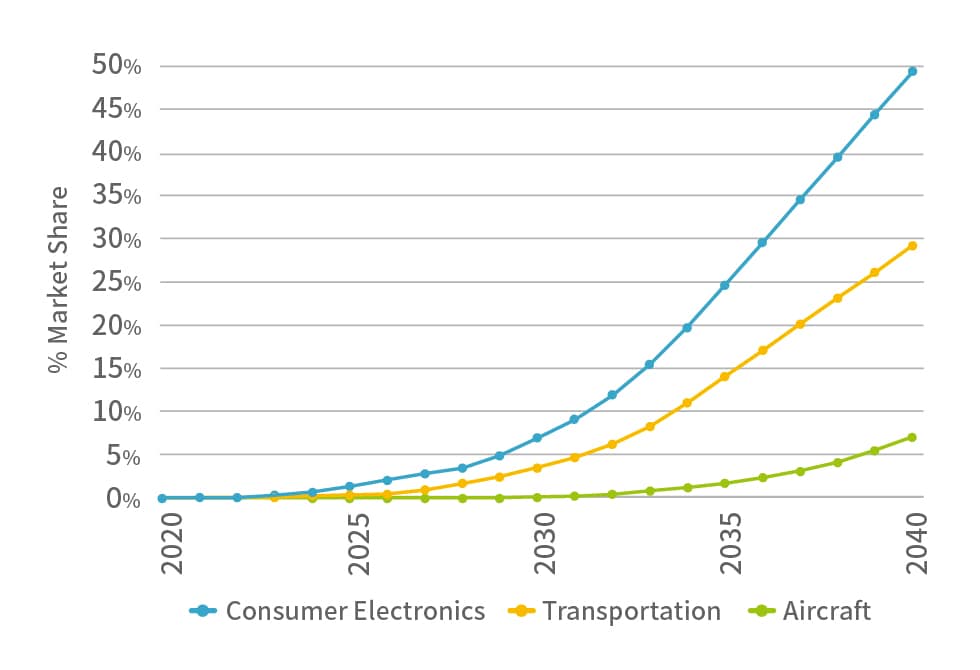
Source: Created by TDK based on data from The Faraday Institution and various Internet sources
Conventional lithium-ion batteries vs. solid-state lithium-ion batteries
Highlights of CeraCharge, the solid-state SMD battery pioneered by TDK
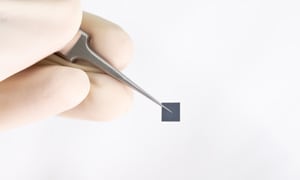
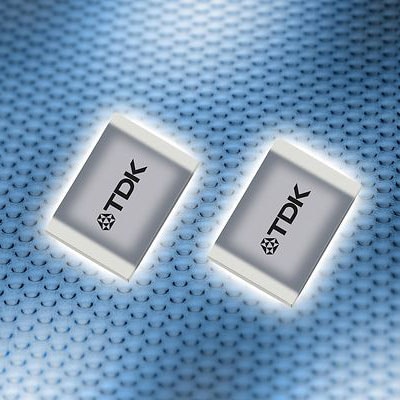
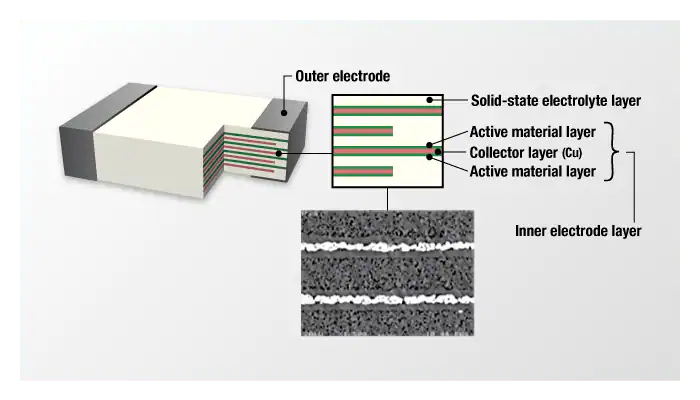
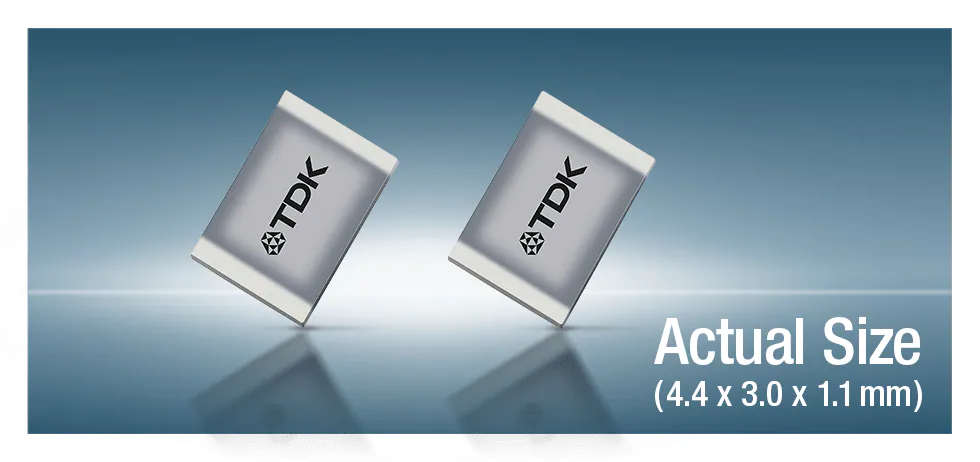
Amid the global race to develop solid-state batteries, TDK successfully created the world’s first solid-state SMD (Surface Mount Device)*1 battery, CeraCharge, in 2020. CeraCharge was developed based on TDK’s advanced multilayer ceramic technologies and is notable for its suitability for mass production. Its solid ceramic electrolyte eliminates the risk of leakage and fire, while other practical properties include: 4.5 mm by 3.2 mm by 1.1 mm in size, a rated voltage of 1.5 V, a capacity of 100 μAh, and an operating temperature range of -20˚C to 80˚C. What’s more, in 2024, TDK succeeded in designing and developing a new material for solid-state batteries with a substantially higher energy density than current products by leveraging the company’s long-standing expertise in materials development and by adopting an oxide-based solid electrolyte and lithium alloy anodes.
Additionally, CeraCharge’s SMD packaging facilitates battery placement, helping keep assembly costs down. Its advantages in size, safety and lifespan offer great potential for implementation in IoT devices to be used in a variety of settings.
Cross section of CeraCharge® solid-state battery (schematic diagram)
Inaugural application: Cooking thermometers
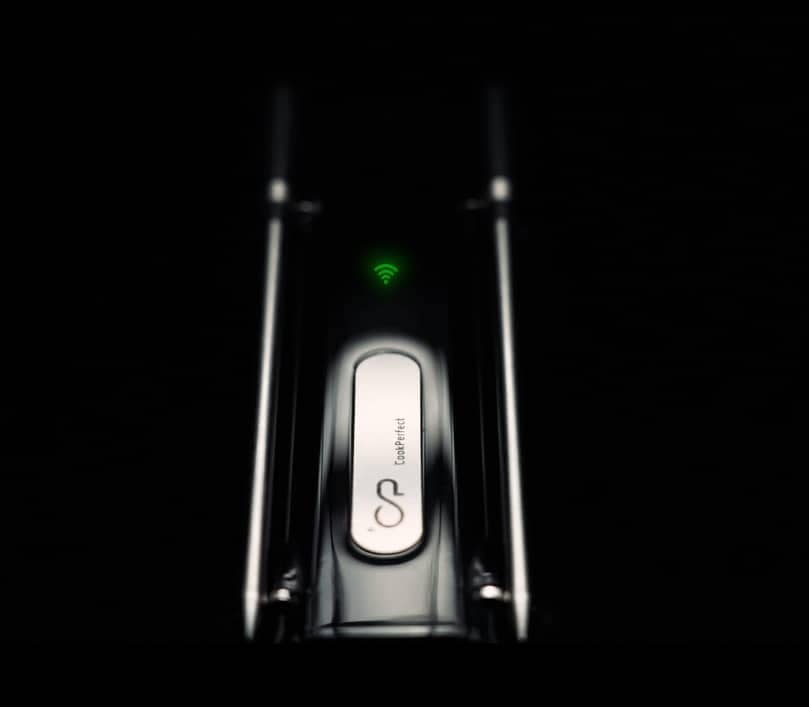
CeraCharge, a safe, chip-sized solid-state battery, has been working its way into a wide range of IoT products. One such application is a cooking thermometer from Danish company CookPerfect. The device is a 15 cm metal thermometer probe with five temperature sensors, a BLE (Bluetooth Low Energy)*2 communication module, and TDK’s CeraCharge. The internal temperature of meat cooking inside an oven can be checked in real time using a smartphone by simply inserting the probe. This breakthrough product enables anyone to cook challenging, large blocks of meat like Christmas dinner roasts at perfect temperatures.
Martin Kloster, Co-Founder and Managing Director of CookPerfect, discussed the product and its development process. “When we began designing CookPerfect in 2016, battery technology that would allow measuring at five positions, run complex algorithms, and small enough to be built into the unit was simply unavailable. But with CeraCharge, we were able to create the first ‘true wireless’ thermometer.” Kloster stressed the importance of reliability and safety, as these thermometers are inserted directly into food and used in high-heat ovens and grills. “There must never be any chemical leakage. We also needed a high operating temperature range that could tolerate usage inside ovens. CeraCharge has no leakage risk due to its solid form, is small enough to be installed into a 3.7 mm-diameter unit, and can withstand up to 85 ˚C—these were were major factors in our decision to employ it in our product.”
CookPerfect’s wireless meat thermometer

(Photo provided by CookPerfect)
A full-fledged IoT society is on the horizon as devices with various sensors—like this cooking thermometer combining temperature sensors with communication capabilities—continue to proliferate. Along with the growing need for batteries in diverse sizes and specifications, CeraCharge is currently being considered for integration into a wide variety of devices, including real-time clocks (RTC)*3 for smart meters and smart sensors. Solid-state batteries are also ideal for wearable devices worn directly on the body, as they feature excellent thermal stability.
Coin cell batteries—most of which are disposed of today—are gradually expected to be replaced by rechargeable types, and solid-state versions are anticipated. TDK, the first in the world to commercialize solid-state batteries, continues to work on expanding its lineup of products with increased miniaturization and capacities to cover a broader range of applications. CeraCharge will continue to empower the rapidly expanding IoT market.
CeraCharge® solid-state battery
For more information, please visit our Product Center.
Conclusion
Solid-state pushes battery safety and reliability forward by swapping liquids for stable solids, then shrinks the package to chip scale so it can live on the PCB next to sensors and radios. CeraCharge proved the concept in 2020; the 2024 materials jump points to much higher energy in the same footprint. That combination puts wearables and small IoT devices first in line, with broader categories following as capacities climb.
FAQ
Q: What do solid-state batteries solve vs conventional Li-ion?
A: They remove flammable liquid solvents, improving safety and stability, and typically extend cycle life.
Q: What is CeraCharge in practice?
A: A surface-mount, all-ceramic solid-state cell designed for mass production and easy PCB assembly.
Q: What are its headline specs?
A: Rated 1.5 V, about 100 μAh, sized roughly 4.5×3.2×1.1 mm, with an operating range around −20 to 80 °C.
Q: What’s new in 2024?
A: A TDK solid-state battery material with about 100× higher energy density, using an oxide electrolyte and lithium-alloy anodes.
Q: Where could these replace coin cells first?
A: Earbuds, hearing aids, smartwatches and compact IoT nodes that need safe, rechargeable power.
Q: Why was CeraCharge chosen for a cooking thermometer?
A: Solid ceramics mean no chemical leakage and good heat tolerance, which is critical in food and oven environments.
Q: How does SMD packaging help device makers?
A: It drops into standard pick-and-place flows, lowering assembly cost and simplifying placement in tight designs.
Terminology
- Surface Mount Device (SMD): An electronic component mounted directly on the surface of a printed circuit board using solder. This method uses less space compared to mounting components with leads on a printed circuit board with holes, enabling the miniaturization of devices.
- BLE (Bluetooth Low Energy): A part of the Bluetooth standard, the short-range wireless communication technology. Because of its low power consumption and low cost, it is attracting attention as a communication technology for use in IoT devices.
- Real Time Clock (RTC): A circuit embedded in a computer or device that continuously measures the passage of time even when the system is powered off.
Related links