Precision Under Intense Conditions:
How High-Temperature MEMS Accelerometers Advance Downhole Navigation
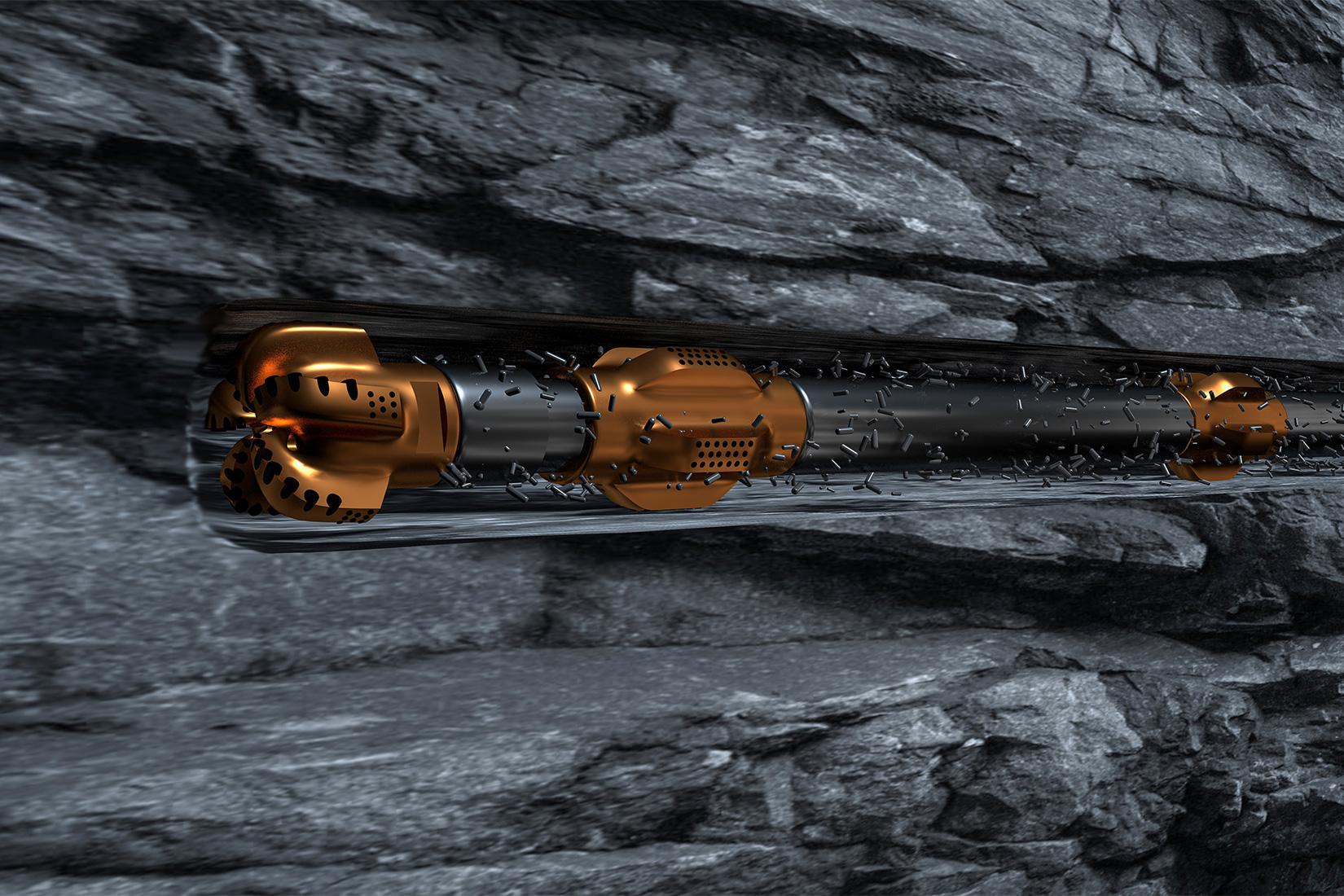
Drilling thousands of meters below the surface is rarely a straight path. Like navigating through an unseen
landscape, modern drilling systems must follow complex trajectories, change direction, and move through challenging
geological conditions where even small deviations from the planned course can have significant consequences.
Precise information about a drilling tool’s position and movement is essential. Measurement While Drilling (MWD)
systems provide this information while drilling is underway, helping operators understand the tool’s orientation and
to make adjustments as conditions change.
However, collecting reliable measurements underground is not easy. Downhole equipment operates in extreme
temperatures with continuous vibration and can experience sudden mechanical shocks. TDK’s high-temperature MEMS
accelerometer technology is designed to provide the stable, precise sensing needed to support reliable navigation in
these demanding downhole environments.
Table of Contents
Key Takeaways
- Directional drilling requires highly accurate measurements despite extreme heat, vibration, and mechanical shock.
- MEMS technology can help reduce sensor size, weight, power consumption, and system complexity while supporting demanding sensing applications.
- TDK has developed high-temperature MEMS accelerometers designed to maintain precise inclination measurements in harsh downhole environments.
The Challenge of Precision Deep Underground
As subsurface energy projects have become more technically demanding, directional drilling technology has had to keep up the pace.
Operators may need to reach precise underground targets or guide drilling equipment through formations where a straight vertical path is not possible. These capabilities are well established in conventional energy production and are also relevant as geothermal development places greater emphasis on accessing deep, high-temperature underground resources.
In either case, the sensing challenge is similar: operators need dependable information about the drilling assembly’s orientation while equipment is operating in an extremely demanding environment.
Temperatures can exceed 150°C. Vibration from drilling motors can be severe and nearly continuous. Mechanical shocks can also create another source of measurement error.
For instance, if an accelerometer loses accuracy, the resulting errors can affect the drilling device’s calculated orientation. Even a tiny deviation may require additional corrections or make it harder to reach the intended target.
The engineering challenge, therefore, goes well beyond building a sensor that can withstand harsh conditions. The sensor must retain accuracy while those conditions persist.

Why Downhole Sensing Is Evolving
For many high-performance inertial applications, technologies such as quartz accelerometers and Fiber Optic Gyros (FOGs) have long provided highly accurate measurements. However, these legacy technologies can also be relatively expensive and bulky, with analog-centric architectures that can add complexity to system design. They may also be more susceptible to demanding mechanical conditions, creating additional challenges where shock, vibration, and durability are critical.
Their capabilities are well established, but downhole applications also place growing demands on other parts of the system.
Product designers must consider size, weight, power consumption, durability, integration, and cost in addition to measurement performance. Reliability is especially important in downhole applications, as component failure can mean more than simply replacing a sensor. Retrieving equipment can add time and operational complexity to a project.
This creates demand for sensing technologies that combine precision with a smaller, more robust system architecture.
The objective is not simply miniaturization. It is to maintain dependable measurement performance while using limited space and power more efficiently inside increasingly sophisticated drilling equipment.
What High-Performance Inertial MEMS Can Bring to the Equation
Micro-Electro-Mechanical Systems, or MEMS, combine microscopic mechanical structures with semiconductor manufacturing processes; inertial MEMS, in particular, detect physical changes such as movement, acceleration, and rotation speed.
For downhole sensing, the advantages go beyond the component’s size.
High-performance inertial MEMS accelerometers can support:
- Smaller and lighter designs
- Lower power consumption
- Mechanically robust structures
- Easier integration with digital systems
- Greater potential for cost-effective deployment at scale
These characteristics align closely with the industry’s growing focus on low-SWaP design: reducing size, weight, and power without sacrificing the performance an application requires.
That becomes increasingly important as drilling and other subsurface technologies incorporate more sensors, electronics, and digital capabilities into limited spaces.
The challenge has historically been preserving high measurement reliability when inertial MEMS devices are exposed to the severe vibration, shock, and temperature conditions found downhole.
Advances in high-performance inertial MEMS sensing matter most in filling that gap.
How TDK Is Tackling the Challenge

Product Marketing Manager
Tronics Microsystems
TDK has developed its AXO315T series of high-temperature MEMS accelerometers for demanding energy-market applications, including Measurement While Drilling, Logging While Drilling, directional drilling, and wireline operations.
For Tronics Microsystems, a company positioned as TDK group’s specialist in high-performance MEMS inertial sensors, the series also fits within a broader focus on high-performance inertial sensing technologies for energy, industrial, and transportation applications.
Pierre Gazull, Product Marketing Manager at Tronics, explains:
“Our MEMS inertial sensors are known to provide extremely precise and stable acceleration measurement for dynamic systems operating under severe vibrations and shocks. After several successful deployments in demanding aerospace and railway applications, expanding the temperature range of our AXO accelerometer series to meet the needs of the energy sector was a natural evolution for TDK, as this market is one of our strategic segments alongside the transport and industrial sectors.”
The series currently includes two versions: the AXO315T0, rated from –30°C to +150°C, and the AXO315T1, which extends the upper operating temperature to +175°C.
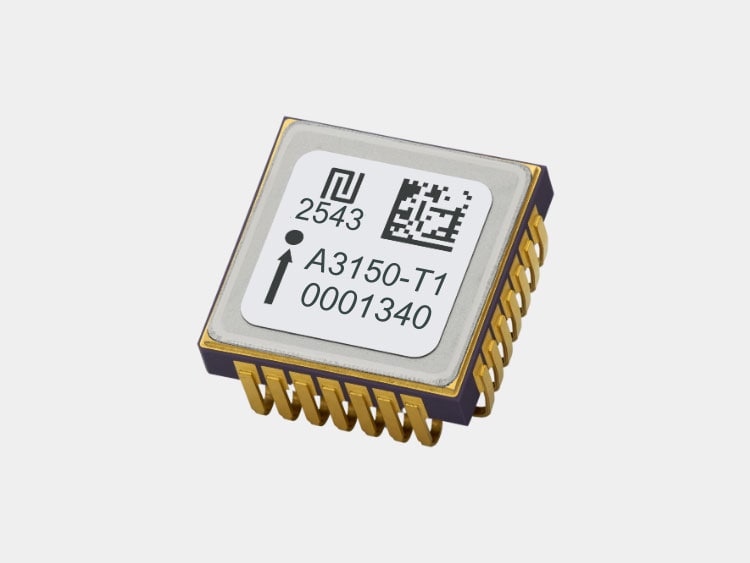
Both are single-axis, ±14 g accelerometers designed to support precise inclination measurement.
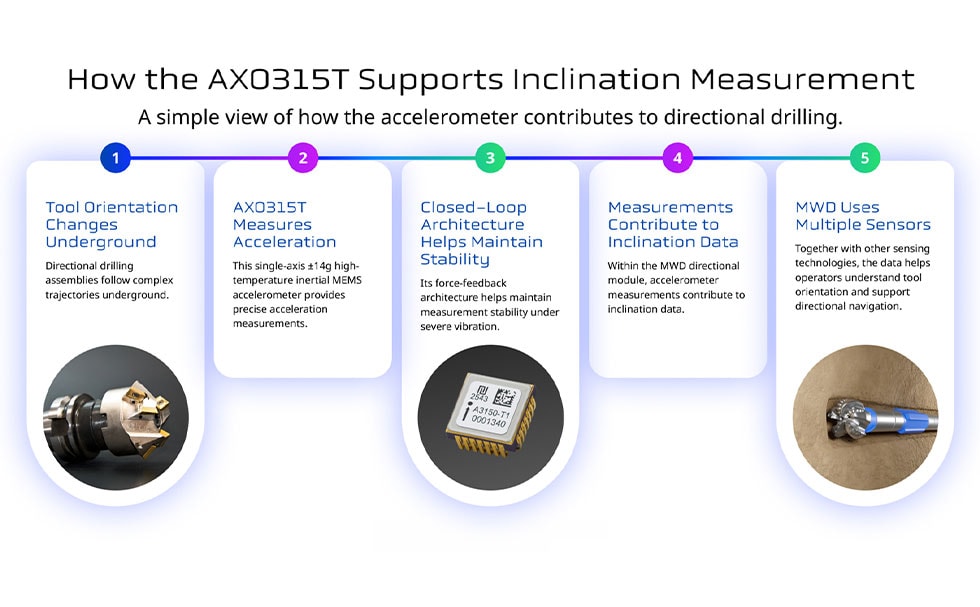
A key part of the design is its closed-loop, or force-feedback, architecture, which helps maintain measurement stability under severe vibration.
This helps address vibration rectification error, or VRE, in which intense vibration introduces error into an accelerometer’s output. The AXO315T achieves a 10× improvement in VRE compared with traditional open-loop MEMS accelerometers.
For directional drilling systems operating near motors and other major vibration sources, greater measurement stability can translate into more dependable inclination data.
High-temperature capability is another part of the equation. Both versions are designed for more than 1,000 hours of powered operation at their maximum rated temperatures.
The devices also package these capabilities into approximately 12 × 12 × 5.5 mm and include a 24-bit digital SPI interface for direct connection with digital systems.
Together, these characteristics address two sides of the same engineering challenge: preserving precise sensing in severe physical conditions while fitting efficiently into increasingly compact and digitally integrated equipment.
From Sensor Performance to Operational Capability
The importance of improved accelerometer performance becomes clearer at the system level.
Within an MWD directional module, accelerometers work alongside other sensing technologies to help determine the position and orientation of the drilling assembly. Accurate acceleration measurements contribute to the inclination data operators use to understand the tool’s trajectory underground.
More stable sensing can therefore support more reliable navigation where maintaining the planned trajectory is critical.
Reliability also matters because interruptions can have consequences well beyond the individual electronic component. Sensors that operate accurately for longer periods in high-temperature, high-vibration conditions can reduce the risk of interventions associated with component failure.
Smaller size and lower power requirements give engineers more flexibility when designing the wider system.
The value is not simply that a sensor is smaller. Engineers can achieve the required performance with less space, lower power consumption, simpler digital integration, and greater resistance to demanding operating conditions.
For subsurface energy technologies, those improvements can help use equipment, energy, and operating time more effectively.
Precision for a Changing Energy Market
The energy landscape continues to evolve, but the engineering demands placed on downhole equipment remain formidable.
Directional drilling systems must traverse complex trajectories and operate reliably in conditions where high temperatures, vibration, and mechanical shock are unavoidable. At the same time, engineers continue to seek smaller components, lower power requirements, greater durability, and simpler integration.
These requirements apply across numerous energy applications. As geothermal technologies continue to develop alongside established forms of energy production, precise measurement in extreme underground environments will remain an important engineering requirement.
High-performance MEMS technology provides another way to meet that challenge.
For TDK, the AXO315T series shows how advances in sensing can combine high-temperature operation, vibration resistance, digital integration, compact size, and precise measurement.
A component measuring only millimeters across can become part of a much larger system guiding drilling equipment thousands of meters underground.
Summary
Accurate downhole navigation depends on much more than knowing where a drilling system is intended to go. Sensors must provide dependable information while operating in some of the toughest conditions modern electronic systems encounter.
High temperatures, severe vibration, mechanical shock, limited space, and power constraints all shape the engineering challenge.
By applying high-performance MEMS technology to these conditions, TDK is helping expand the possibilities for compact, precise, and durable inertial sensing.
As subsurface energy technologies continue to evolve, advances such as these can help engineers build systems that maintain accuracy under pressure while using space, power, and equipment more efficiently.