
Sports Tech@TDK
The relationship between endurance and the diet of marathon runners
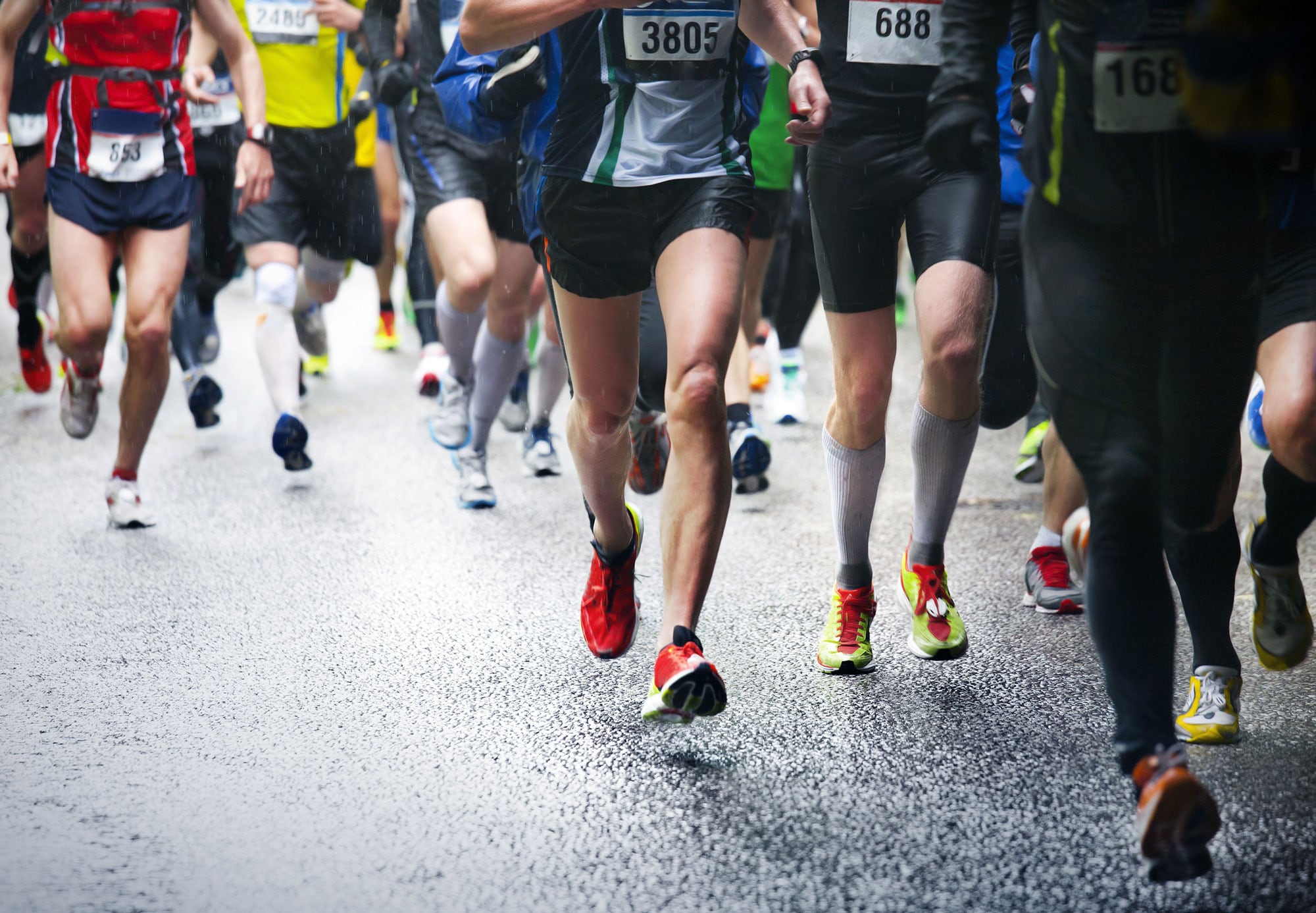
The marathon derives from the legend of a young man who ran, without any rest, in order to recognise the victory of the Greek army in the 'Battle of Marathon' during the Persian Wars in the 5th century BC. The marathon run was introduced into the modern Olympic Games held in Paris in 1924, with an official defined distance of 42.195 km.
Marathon runners are not always blessed with a good physique. It is often said that the reason Japanese athletes excel at marathons is because it has a lot to do with their diet, which is their source of energy. Long-distance running is a sport that requires stamina. Usually, we increase stamina by consuming protein, such as meat and fish, but this is a misconception, as it is the consumption of carbohydrates that are stored in the body contributes to building stamina. This is why marathon endurance depends heavily on glycogen and why understanding what is endurance running helps runners plan energy intake. For athletes focused on long distance endurance running, maintaining balanced energy for runners becomes essential.

Key Takeaways
1. Marathon runners have different nutritional requirements than sprinters because long-distance running depends on sustained aerobic energy production.
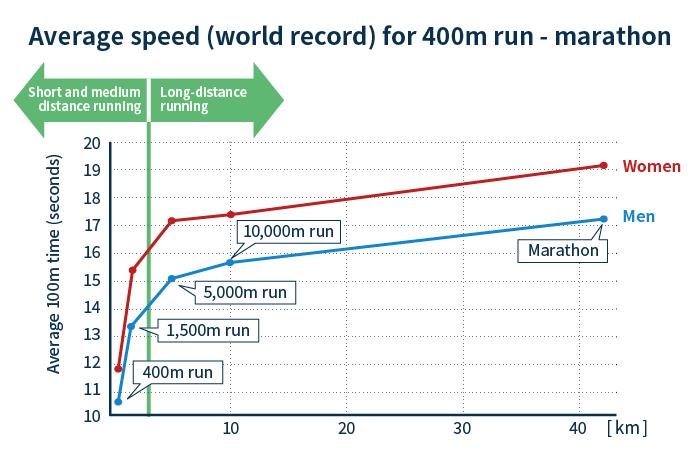
2. The graph on page 1 comparing world-record paces (400 m vs. marathon) shows how speed rapidly drops as distance increases, emphasizing the shift from anaerobic to aerobic metabolism.
3. Carbohydrate availability is critical for endurance: glycogen stored in muscles and liver fuels long-duration effort, and insufficient glycogen leads to early fatigue (“hitting the wall”).
4. The aerobic–anaerobic exercise diagram on page 1 highlights how the body transitions from anaerobic bursts at high intensity to steady aerobic energy output across prolonged effort.
5. Page 1 also includes a glycogen-vs-fat-burning illustration showing that fat oxidation depends on adequate glycogen supply — low glycogen sharply reduces fat-burning efficiency.
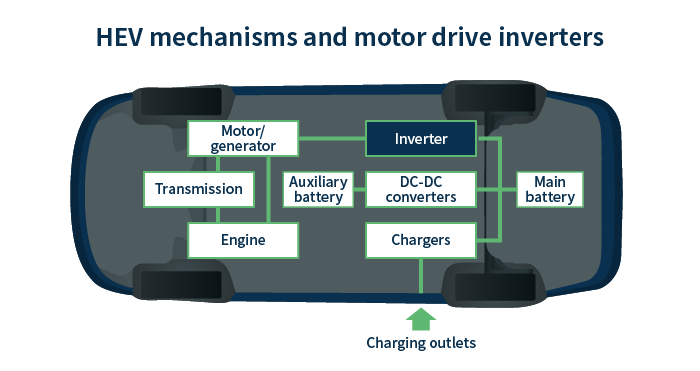
6. Page 2 connects human endurance principles with HEV (Hybrid Electric Vehicle) efficiency: HEVs combine engine and motor to optimize energy output the same way athletes combine different metabolic pathways.
7. Transformers used in HEV motor drive inverters (page 2) ensure efficient power conversion, analogous to how nutrition optimizes energy transfer in endurance athletes.
Marathon and short-distance runners have different dietary requirements
During early Olympics marathons, when sports physiology was still in its infancy, many Western athletes who had run the 42.195 km would often collapse as soon as they reached the finish line, while Japanese athletes seemed to be unaffected, showing no signs of fatigue, which made people wonder why this was happening.
After much research, It was found that it seems to be related to diet. Unlike the meat-heavy Western diet, Japanese athletes ate a simple diet of rice and pickled plums, demonstrating that carbohydrates are extremely important as an energy source for long-distance running.
Carbohydrate, fats and protein are called the three macronutrients. Of these, carbohydrates and fats are used as energy for muscle movement. Carbohydrates such as rice, wheat, potatoes and sugar are stored in the body as glycogen in the liver and muscles. This aligns with the typical diet of a marathon runner, since most athletes prepare through a diet for marathon running that prioritizes glycogen storage. Many marathon runners diet plans emphasize rice, grains and potatoes when choosing what to eat to increase stamina for running.
Anaerobic exercise, in which the muscles are fully active for a short period of time, and aerobic exercise, which involves endurance, are aspects of most sports in some way or another.
Short distances such as 100m, 200m and 400m, are anaerobic, using glycogen for energy. However, there is a limit to the amount of glycogen that can be stored in the liver and muscles, so during aerobic exercise, such as medium and long-distance running, fat in the body is burned to provide energy. In fact, the burning of fat also requires glycogen, therefore, while short-distance running is not affected much, when it comes to long-distance running such as marathons, insufficient glycogen stores can have a significant impact on the outcome. This explains the importance of glycogen running strategies and the need for stable energy for running long distances. Many athletes ask does long distance running burn fat, but the bigger issue is avoiding runners fatigue caused by depleted glycogen reserves.
The average speeds of the world records for 400m, medium and long distance running and the marathon are shown below. The average speeds of short and middle-distance runners and long-distance runners drop off rapidly after approximately 1,500m. The 1,500m race is considered to be extremely demanding because it requires both instantaneous force and endurance capabilities. These performance differences also shape the typical marathoners body, distinct from the marathon runner physique seen in shorter events. Variations in the average pace of marathon runners highlight how runner athletes adapt to endurance-focused demands.
Marathon runners need carbohydrates for energy
Proteins such as beefsteak, pork cutlets and yakiniku are usually considered stamina foods by the Japanese, but this is a remnant from a time when food availability was poor. In the West, where meat is the mainstay of the diet, stamina means carbohydrate intake. In order to prevent stamina loss, especially in long-distance running such as marathons, a dietary method called glycogen loading (carbo-loading) was adopted and developed in the West for sports. It is based on the concept of switching from a meat-based diet to a carbohydrate-based diet around three days before a race in order to store sufficient glycogen in the body. If we compare it to a car, fat is petrol and glycogen is battery power. If the battery runs down, the car will not be able to run, no matter how full the petrol tank is. This is the basis of any diet for endurance running, where athletes rely on structured nutrition for running long distance and choose foods that help running endurance. Proper fueling also supports techniques on how to conserve energy when running and how to save energy while running, especially during long races.
In Japan, onigiri (rice balls) have long been a good way to replenish glycogen, as they are a portable food for excursions and trips. However, if you eat too many carbohydrates and do not exercise, the carbohydrates will turn into fat, which will be stored in the body and cause obesity. Ultimately, a well-balanced diet and moderate exercise are the basis for improving health.
From both a nutritional and sports physiology point of view, traditional Japanese food should be looked at more closely.
Marathon runners often include high-altitude training at around 3,000m altitude in their training menus. This is because developing endurance in a low-oxygen environment increases the amount of oxygen carried by the blood at ground level and improves records. This approach effectively improves glycogen efficiency - acting as an “energy-saving system” for the body.
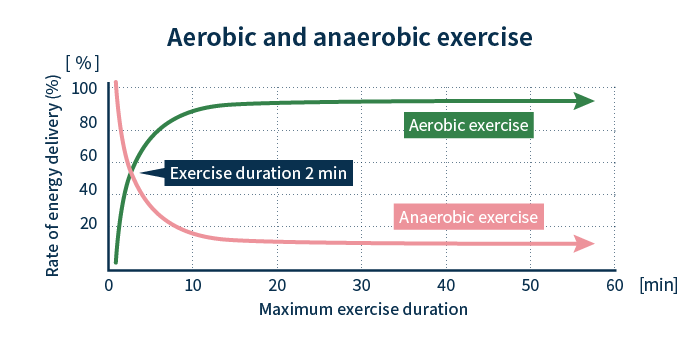
When the maximum exercise duration is 2 minutes, the ratio of anaerobic to aerobic exercise is approximately equal, and when it exceeds 2 minutes, aerobic exercise is the main component. A maximum exercise duration of 2 minutes is, for example, the amount of exercise required for 2 to 1.5 laps of a track when running 100m at a pace of 15 to 20 seconds as fast as possible.
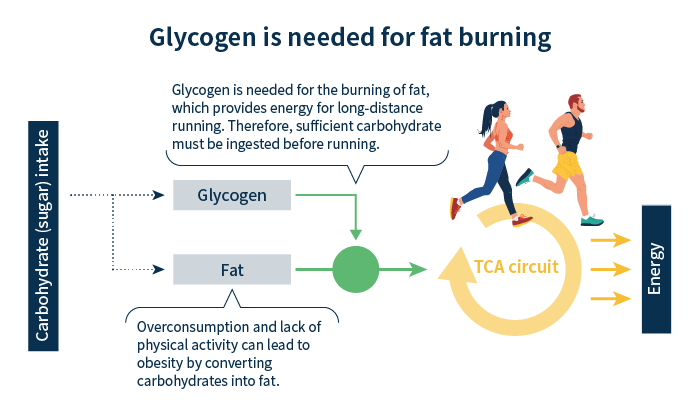
The TCA circuit is the body's mechanism for burning fat to generate energy. Various vitamins and amino acids are also required for the smooth functioning of the circuit.
Energy-saving drive of HEVs combining engine and motor
Vehicle drive systems also require endurance and instantaneous power. HEVs (hybrid vehicles) save energy by combining a petrol engine, which is advantageous for sustained high-speed driving over long distances, and an electric motor, which is advantageous when instantaneous power is required, such as at the start of a race.
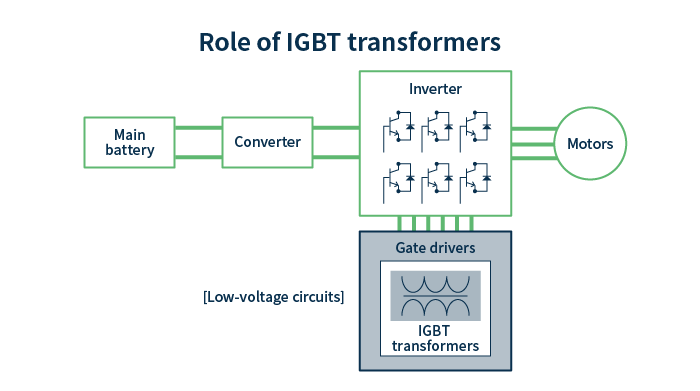
The drive motor of the HEV boosts the DC voltage of the main battery to a high voltage and then converts it to AC to drive the motor. The inverter is responsible for this DC-AC conversion. Generally, three-phase AC is obtained by high-speed switching of six semiconductor elements in the inverter.
Power elements such as insulated gate bipolar transistors (IGBTs) are used as semiconductor elements because the higher the voltage, the smaller the current flowing through the power elements and the more compact the inverter and motor.
The role of the IGBT transformer (gate drive transformer for IGBTs) is to connect the inverter section, which is a high-voltage circuit, and the low-voltage circuit that controls the IGBTs, as well as providing electrical isolation.
IGBT/FET transformers
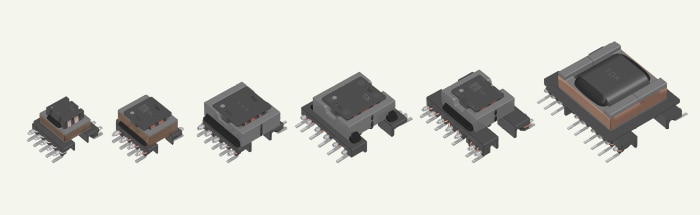
Transformers electrically isolate high-voltage circuits such as inverters and low-voltage circuits that control power elements such as IGBTs, etc. Variations in the gate voltage of power elements such as IGBTs cause uneven reliability between elements, so gate voltage equalisation is necessary and requires excellent transformer performance. TDK has achieved fully automated and highly coupled (low leakage) isolation transformers with stable output by adopting new structures such as automatic winding technology.
Conclusion
Endurance running is a balance between physiology, nutrition, and pacing strategy. Long-distance athletes depend heavily on carbohydrate stores to maintain energy output over time, because glycogen enables efficient fat metabolism and supports aerobic stability. The diagrams on page 1 emphasize how energy systems shift with duration: sprinters rely on anaerobic bursts, while marathon runners must sustain aerobic output for hours. Without adequate glycogen, performance collapses, regardless of training level.
The article also draws a clever parallel to HEV technology presented on page 2. Just as hybrid vehicles combine engine and motor power to maximize efficiency and reduce fuel consumption, marathon runners rely on coordinated metabolic pathways to stay efficient. TDK’s transformers used in inverters ensure smooth energy conversion within HEVs, reflecting the same principle: consistent, optimized energy management leads to better performance whether in machines or the human body.
FAQ
Q: Why do marathon runners need more carbohydrates than sprinters?
A: Because carbohydrates supply glycogen, the primary fuel for long-duration aerobic exercise. Sprinters rely more on anaerobic energy, which uses stored ATP and creatine phosphate instead.
Q: What happens when a runner runs out of glycogen?
A: Fatigue spikes sharply, pace drops, and the athlete may “hit the wall.” Low glycogen also reduces fat-burning efficiency, making it harder to maintain effort.
Q: Why is fat not enough as a fuel source during a marathon?
A: Fat oxidation is slow and depends on adequate glycogen. Without glycogen, the body cannot produce energy fast enough to sustain race pace.
Q: What does the average-speed graph on page 1 illustrate?
A: It shows that as running distance increases, pace decreases sharply, highlighting the shift from anaerobic to aerobic metabolism.
Q: Why does the article mention HEV motors and transformers?
A: To illustrate energy-management parallels. Like athletes optimizing fuel use, HEVs optimize electric and combustion power using transformers and inverters.
Q: What type of transformer is used in HEV motor drive inverters?
A: IGBT/FET transformers, shown on page 2, which support high-voltage and high-efficiency power conversion in hybrid vehicle systems.
TDK is a comprehensive electronic components manufacturer leading the world in magnetic technology
Share Share this article
RecommendedPeople who viewed this article also viewed here

Sports Tech@TDK
Figure skating Jumps -Dynamic jumps and spins in figure skating are the star of winter sports-

Sports Tech@TDK
Curling - A thrilling and intellectual sport, also known as "chess on ice"
Bridging the Past, Present, and Future of Tech
Quantum Computing Explained: How It Works, Real-World Applications, and Industry Impact
PickUp Contents